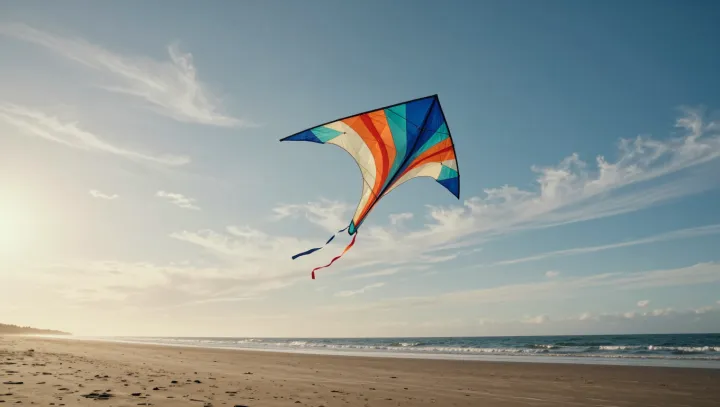
The kite line goes taut. Above it, the sail meets oncoming air at an angle of attack, and that geometry, rather than an upward shove from wind, redirects the flow and produces lift. A wing does much the same. Pressure differs across the surface as air bends, while the line supplies opposing tension and gives the kite a stable reference.
The common picture is wrong. Air does not scoop beneath a kite and carry it skyward like a hand; the inclined sail changes the momentum of the passing stream, sending part of that stream downward. Newton's third law answers back. The resulting aerodynamic force has an upward component, while drag acts downstream and gravity pulls below. No hidden engine exists. The bridle and tail can set attitude, limiting wobble and helping the surface hold an effective angle of attack.
That is the elegant part. A kite is not defeating the wind but bargaining with it, because the tether converts a moving airmass into a constrained system where lift, drag, weight, and tension must balance. Remove the line, and the bargain fails. Too little angle yields little lift; too much invites flow separation, raising drag and making the craft unstable. In the small triangle between sail, air, and string lies a lesson in flight: ascent begins with a downward turn.