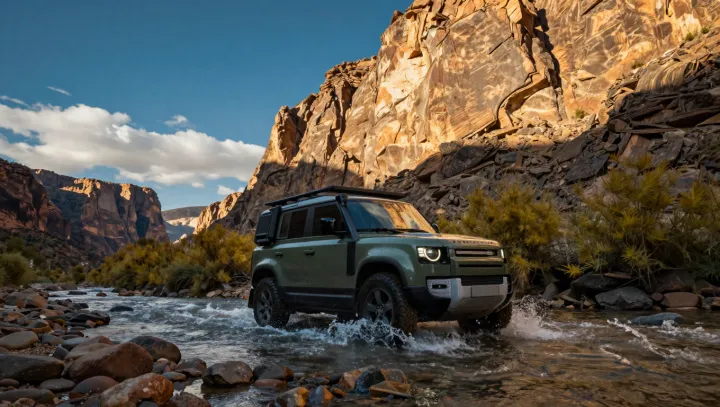
Water flashes over stone, and the shallow crossing looks almost insulting; beneath its thin sheen, however, loose rock can erase a tire's purchase before an SUV driver sees the first dip. The surface lies. Depth is the wrong measure when the streambed shifts under load and masks the ground's changing shape.
The smaller crossing can be the harsher test because traction depends on the coefficient of static friction, not water depth, and rounded stones can roll or slide as torque reaches the contact patch. Grip vanishes fast. A tire that seems planted on dry rock may meet an algae film, a submerged gap, or a tilted slab, while suspension articulation transfers weight away from the wheel that needs it. The result is geometry: reduced normal force, broken contact, and a vehicle pulled off its intended line.
That is why confidence is expensive. Deep water announces its threat; a shallow run invites speed, casual steering, and the false belief that an SUV's height settles the matter. It does not. Ground clearance cannot restore friction, and four-wheel drive cannot make every wheel bite when loose stones move beneath them. The stream, nearly silent above its bed, leaves one question hanging: what other hazards become most dangerous when they look too small to matter?