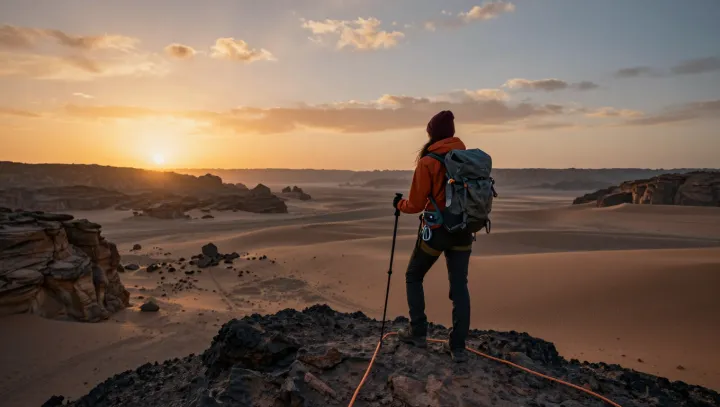
The ridge is a poor judge of ambition: it turns a broad sandstone back into an invitation to hurry, even while grains beneath each boot are ready to shear under load. Heat does its quiet work. A sun-struck slab radiates energy upward, and distance, stripped of shade and scale, begins to look deceptively manageable.
Restraint is the real competence here, not the summit photograph. On loose sandstone, traction is less a property than a negotiation between grain size, slope angle, and the shifting center of mass; a quick stride can turn that negotiation into a slide. The body is bargaining too. Solar radiation, convection, and evaporation pull at thermoregulation, while dehydration narrows attention before thirst announces itself. Slow down. Test each placement. Leave space between decisions. This is not timidity; it is risk management conducted with soles, breath, and an honest reading of exposure.
The old romance of speed has little to offer a ridge that cannot be persuaded. A careful traveler may cover less ground, yet preserve the margin that loose stone and heat are always trying to collect. The reward is modest. At the high point, wind moves over the rock without applause, and patience remains the only mark that does not wash away.