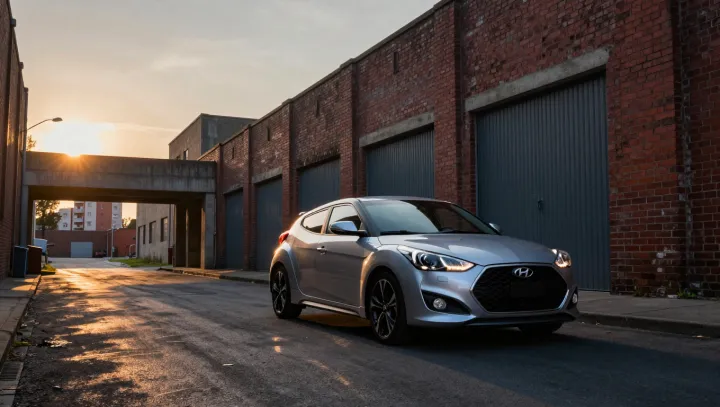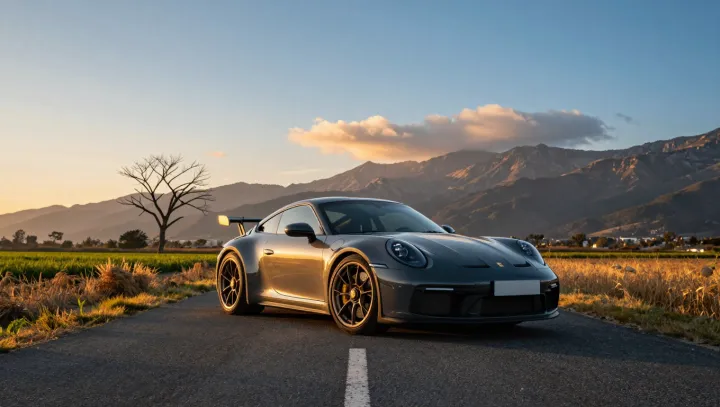
The silhouette is persuasive. Before a tire turns, a low hood, a swept windshield, and a cabin pushed toward the rear announce that air has already shaped the body, even when the car waits beneath indifferent light. This is no costume. Long wheelbases and short overhangs concentrate visual mass within a planted stance, while a low center of gravity makes that promise mechanically credible.
Some creases are theater. Still, the cues people read most closely come from fluid mechanics: a small frontal area limits the air a car must displace, while a tapered roofline can delay flow separation and shrink the turbulent wake that drives pressure drag. The drag coefficient is not visible as a number, yet a clean nose, tight glasshouse, and pinched tail make its logic legible. A controlled boundary layer, rather than ornament, is the quiet ambition. Front splitters and rear diffusers add another clue: when engineered with the underbody, they manage pressure gradients and can create downforce. The parked car appears to be loading the road already.
That recognition is learned. Racing has trained the eye to connect a wide track, exposed brake cooling paths, and a wheel pressed near each corner with hard use, but the association survives because the package answers real demands of heat rejection, tire contact, and high-speed stability. Beauty follows constraint. A sports car standing still performs its first lap in the mind: motion is absent, yet the body seems to be negotiating air that has not arrived.