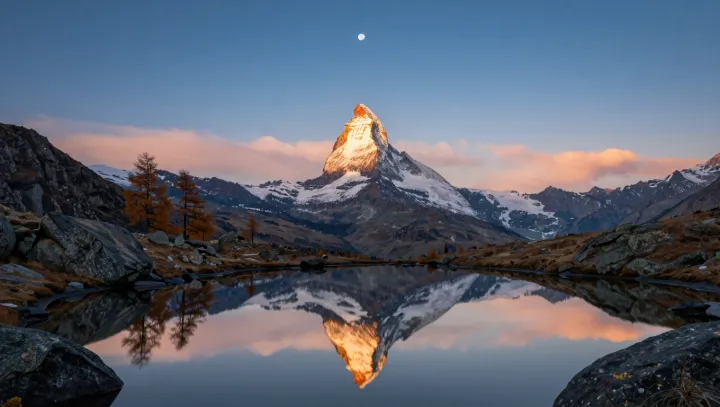
Deceptive is the silence at the lake's rim. Beneath its still surface lies a basin cut by glacial abrasion, while the peak above carries the slower signature of frost wedging and erosion; what appears untouched is, in fact, a record of repeated force. The view misleads politely. Each shelf of rock and each submerged fan preserves a sequence older than any visitor's memory.
The lake is no ornament. Avalanche debris, released from steep walls and delivered in abrupt pulses, can choke channels, raise natural dams, or spread sediment across the basin floor after ice has withdrawn. Geomorphologists read those deposits through stratigraphy, separating coarse rockfall layers from finer material carried by meltwater. The layers keep score. Their order turns a pleasing scene into evidence: not a frozen instant, but a system whose calm rests on accumulated disturbance.
The familiar claim that solitude means permanence is the scene's quietest falsehood. Glaciers excavated the hollow under pressure and moving ice; mass wasting still transfers loosened material downhill; weathering pries apart the summit grain by grain. Change is not absent. It is merely slow enough to flatter the eye. An open-air archive can be damaged quickly, as roads, trampling, or a warmer climate blur signals assembled across spans too large for ordinary memory. At dusk, the water offers no explanation, only depth.