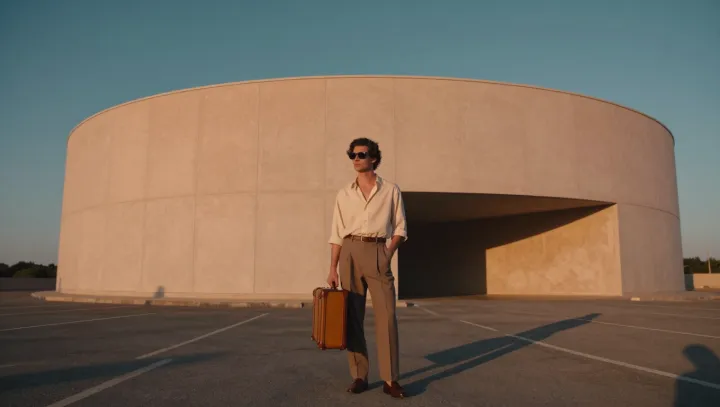
Bare concrete makes an exacting backdrop: its pores, seams, and pale shadows expose every choice, while a loose jacket answers not with polish but with ease. The pairing edits noise. Where glossy surfaces invite performance, the unfinished plane lets drape, proportion, and movement carry the argument.
The effect is less rustic than disciplined. In a figure-ground relation, concrete recedes as a field even when its texture remains visible; relaxed tailoring, with its lowered shoulder line and softer break, becomes the figure without shouting. That restraint reads expensive. Both materials advertise process: aggregate, formwork, crease, and gravity stay legible, so the image feels authored rather than decorated. The chemistry is visual, not sentimental. A sharp lapel against flawless marble can look like a demand for approval. Here, imperfection grants permission.
The trick is scale. Concrete supplies mass and visual silence, whereas an unstructured suit supplies human scale, preventing the setting from turning theatrical or the clothing from becoming costume. The eye trusts limits. This is material honesty, not austerity theater: neither side pretends to be finer than it is, and each gives the other room to register. Luxury becomes control, not display. In the stillness, dressing up becomes something quieter: a body moving through an honest surface, neither concealed nor proclaimed.