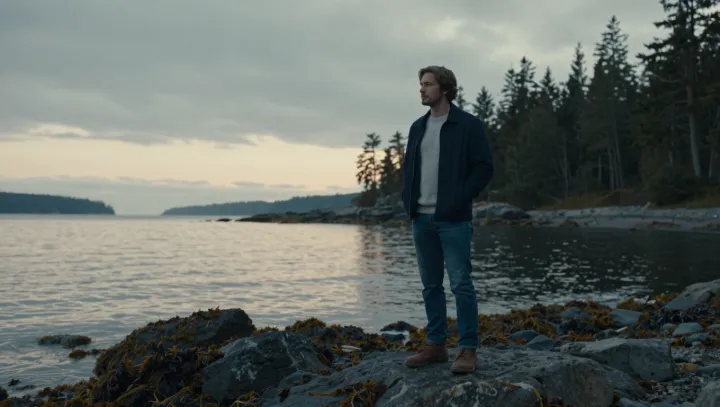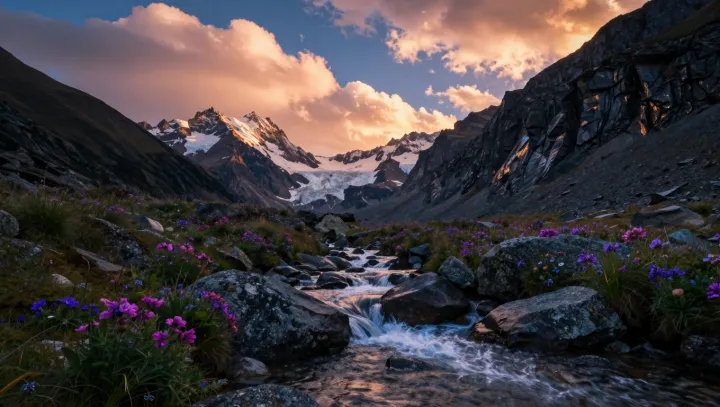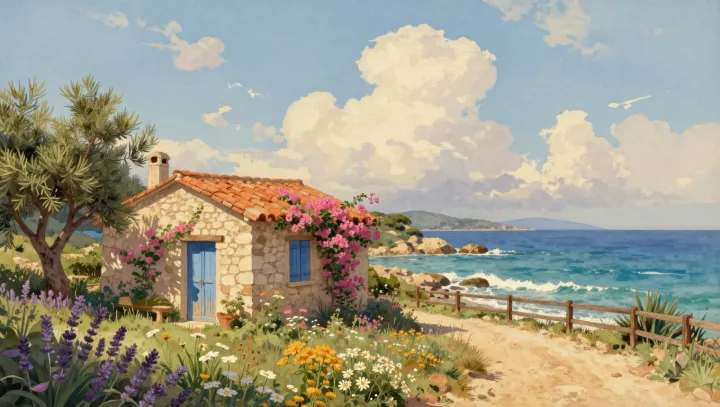
The blue is not paint. Across the gap between a dark rock face and a far hill, sunlight travels through enough air that scattering inserts sky-colored light while extinction removes detail from the object itself. Distance edits the view. What appears gentle is partly a loss of information.
The usual explanation is too tidy. Rayleigh scattering by gas molecules favors shorter wavelengths, yet coastal haze often owes much to Mie scattering from aerosols and tiny water droplets, which scatter a broader range of light and brighten the intervening air. Contrast collapses first. Each added stretch of air raises the share of airlight and lowers the direct signal from ridges, cracks, and shadows; atmospheric perspective is an optical tax paid by distance.
Humidity is the quiet accomplice. Near a shore, hygroscopic particles can swell, increasing scattering and making distant hills appear paler, bluer, and less sharply bounded than nearby stone under the same sun. The eye calls it softness. In fact, air has placed a luminous veil between observer and rock, leaving the far slope to hover at the edge of certainty.