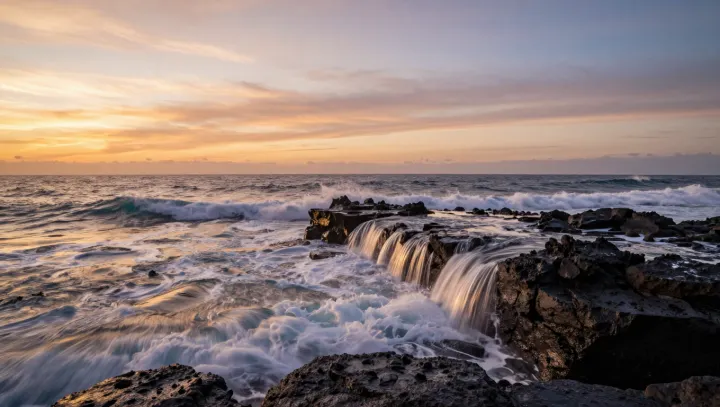
White water lies. At the rock's sharp lip, a breaker that looks harmless from shore forces a boundary layer to separate, rolling the flow into vortices that seize pockets of air and draw them beneath the surface. The calm is cosmetic. Those pockets undergo air entrainment and bubble fragmentation as turbulent kinetic energy tears larger volumes apart, leaving foam to spill shoreward in a cold, noisy sheet.
The shore manufactures force. Each impact converts the wave's forward motion into shear, pressure fluctuations, and vorticity; rock geometry governs where eddies form, how long bubbles remain submerged, and whether the returning wash carries foam across the feet or back into deeper water. Nothing is wasted. Small bubbles rise slowly because drag competes with buoyancy, while their combined surface area scatters light, making the water appear white rather than clear. Abrasion joins in. Repeated turbulence scours grains, flexes marine growth, and delivers oxygenated water into cracks, even as it breaks the water itself into visible evidence of force. The postcard misleads. In narrow fissures, compression and decompression can amplify hydraulic pressure, while suspended sand acts as an abrasive load against exposed faces. Beyond the foam, the horizon keeps its blank expression; below it, stone and water conduct a relentless argument.