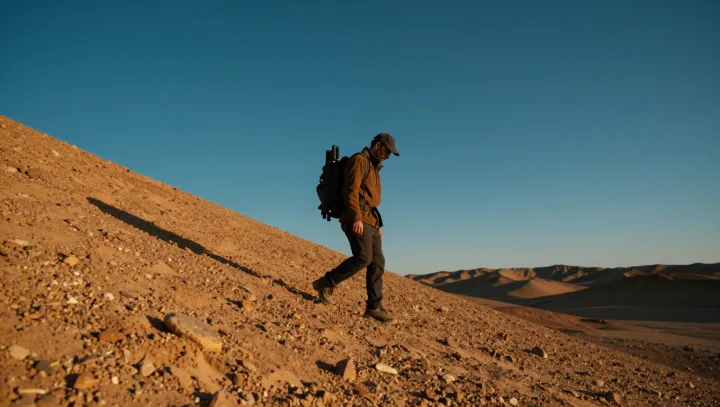
Loose grains set the trap. A desert slope can look harmless until each heel strike drives sand downhill, stealing the stable platform a hiker expects. Gravity gets a vote. During descent, the body must slow itself while its footing shifts beneath it, turning a casual walk into repeated braking on a moving surface.
The knees pay first. Quadriceps perform eccentric contraction, lengthening while resisting the body's downward momentum, and that braking can raise patellofemoral joint reaction force with every step. The effect resembles a processor running heat control in the background: the muscles absorb energy that climbing largely directs into forward propulsion. Sand adds failure points. Granular force chains collapse under the boot, so friction changes mid-stride and the foot can skid before the nervous system corrects balance.
Speed makes it worse. A long stride places the heel ahead of the center of mass, increasing the braking demand and leaving less margin when grains slide. Shorter steps, a softer knee bend, and trekking poles can spread load and improve stability. The deeper lesson is mechanical: downhill travel is not reverse climbing. It is an energy-management problem, and loose sand behaves like faulty ground-state software.