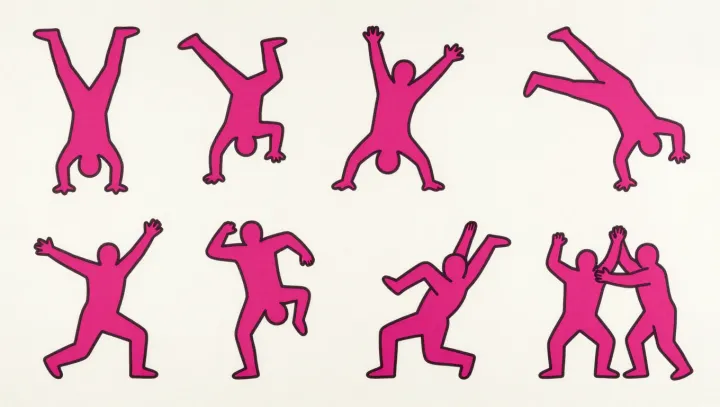
In the soft slap of shoes on a floor lies a social solvent: when several bodies strike time together, distance between strangers can shrink before anyone offers a name. Bodies decide early. Researchers call this interpersonal synchrony; shared rhythm gives each participant a common clock against which movement can be predicted.
That clock is not decoration. Attention narrows. Uncertainty falls fast. Prediction is social labor. The bargain is plain: I track you, and you track me. Through sensorimotor coupling, each person forecasts another's next beat, then corrects tiny timing errors; the loop can blur the line between watching a partner and acting with one. Studies of coordinated walking, rowing, music-making, and dance often report greater affiliation and cooperation afterward, though effect sizes and settings vary. The bond has limits.
The real trick is mutual risk, not magic. Missed steps are visible. When a group keeps time despite that exposure, behavioral synchrony can raise perceived similarity, trust, and self-other overlap, while rhythmic exertion may also engage endogenous opioid signaling. That does not erase disagreement, but it can make shared intent feel physically plausible for a while. Words remain optional. This is why rites, workouts, and rehearsals can create warmth faster than conversation. A chant, drill, or silent walk can make a handful of people feel briefly like a unit, even when their histories point elsewhere. The floor has spoken.