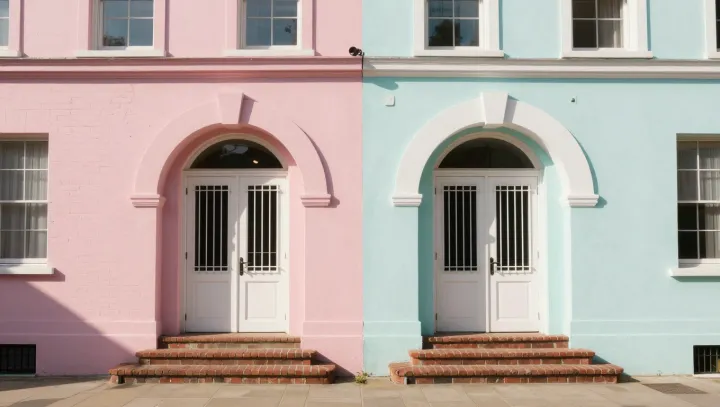
Contrast does the work. A pale door set in a dark facade, or its reverse, catches the eye before cornices, window bays, and masonry joints can compete. The geometry stays put. Yet luminance contrast gives the threshold a distinct visual boundary, turning a repetitive street elevation into a point that can be found at a glance.
This is visual wayfinding. Human vision performs figure-ground segregation almost immediately: the entrance reads as figure, while the broader wall recedes as ground, especially where neighboring townhouses share proportions and materials. Preattentive processing accelerates that judgment. The eye does not need to inspect every detail. It registers difference first, then directs attention toward the break in the pattern.
The best moves stay restrained. Paint, cladding, a recessed surround, or a saturated door can create enough separation without moving a wall, widening an opening, or disturbing the load-bearing system. High contrast can also improve recognition from across a street and in poor light. But excess can flatten the facade into signage. A well-marked door should announce itself, then let the house keep its silence.