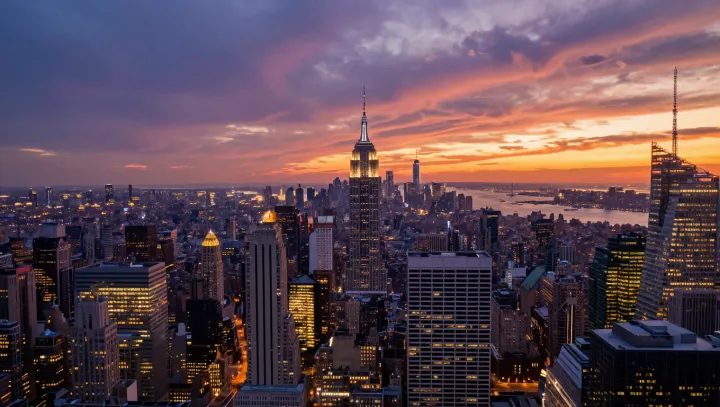
Sunlight is a poor alibi. Manhattan streets can glitter beneath a clear sky while a pedestrian braces against a gust because the towers do not merely block weather: they edit it, squeezing moving air into corridors whose apparent calm vanishes at the next corner.
The surprise is structural. Wind chooses geometry. When flow meets the uneven roofline, pressure gradients form between exposed avenues and sheltered blocks; air then seeks the lower-pressure route, and a narrow street can accelerate it through the Venturi effect even when conditions above the roofs seem mild. Long aligned avenues offer a cleaner channel than broken blocks, especially when the prevailing flow enters near their axis; a street angled across it may instead collect eddies, which explains why one intersection can feel punishing while another, yards away, barely stirs. The effect has a name: channeling, familiar to wind engineers, although each block rearranges it through setbacks, podiums, gaps, and roof heights. Corners make it worse. Downwash carries faster air from upper elevations to the sidewalk, while separation around building edges creates vortices that can turn a steady current into abrupt crosswinds; the pedestrian feels not a single gust, but a chain of local pressure events. Sun changes little. Solar heating can stir convection near facades, yet it rarely defeats the larger mechanics of urban-canyon flow, where surface roughness, street orientation, and tower spacing govern the draft. Beneath a bright pavement, the air keeps its private argument with stone.