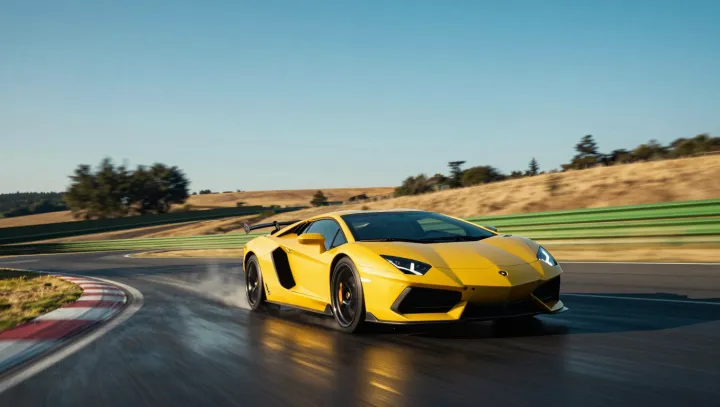
Grip was the product. At Vallelunga, the Revuelto launch put less weight on a headline top-speed run than on whether tire temperature, track surface, and safety procedures could return to the same state lap after lap. Speed came second. That choice made the circuit a laboratory, not a stage, with repeatability as the measure that mattered.
That was the smarter wager. A fast lap can flatter a car when asphalt temperature, wind, and tire condition happen to align; a repeatable lap exposes whether the process holds when those variables drift. The relevant physics is plain: the coefficient of friction changes with heat and surface condition, while brake fade can alter stopping performance. Small margins compound. Like a closed-loop control system, a disciplined launch turns each lap into input for the next; its scientific basis is control theory, where feedback reduces variance instead of merely chasing a peak.
Safety is where this discipline earns its cost. Consistent checks of braking response, tire pressures, and track state can prevent a showpiece run from becoming a gamble, while telemetry gives crews a common record rather than competing impressions. Boring wins here. As sensor data, vehicle software, and pit procedures feed one loop, performance testing can approach a live digital twin of the circuit. The machine will not just record what happened; it will begin to predict which conditions can be trusted.