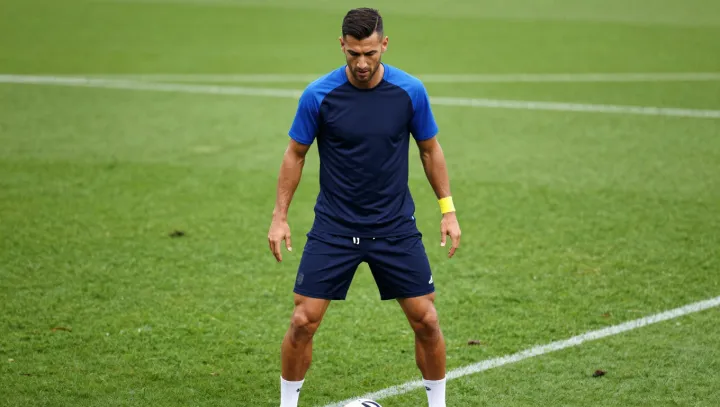
A touch is optional. Cristiano Ronaldo can help create a goal without receiving the ball, because a run that draws a defender away can leave a teammate with room to finish. Absence can produce opportunity. The striker's contribution may sit outside the scoring record, hidden in the space his movement persuades an opponent to surrender.
The defender faces trouble. When Ronaldo threatens the space behind the back line, a marker must decide whether to follow him or protect the area where another attacker could receive possession. Either choice carries risk. Follow the run, and a passing lane may open; hold position, and Ronaldo may become available for a pass closer to goal. Timing makes the difference. A decoy run works when it coincides with the ball carrier's opportunity to pass, while a teammate recognizes the opening before the defence can close it. Movement alone guarantees nothing. The passer still needs accuracy, and the eventual shooter must exploit the room rather than simply occupy it.
Credit follows the ball. Goals and assists identify the final exchanges, but neither automatically captures the attacker whose off-ball movement changes a defender's position and makes those exchanges possible. Watch the marker instead. To judge Ronaldo's influence on a particular goal, trace whether his run actually moves an opponent and whether the resulting gap benefits the teammate who receives possession. That distinction prevents mythology. Not every sprint creates an opening, yet a successful one can leave its author outside the final exchange, watching someone else finish through the doorway he opened.