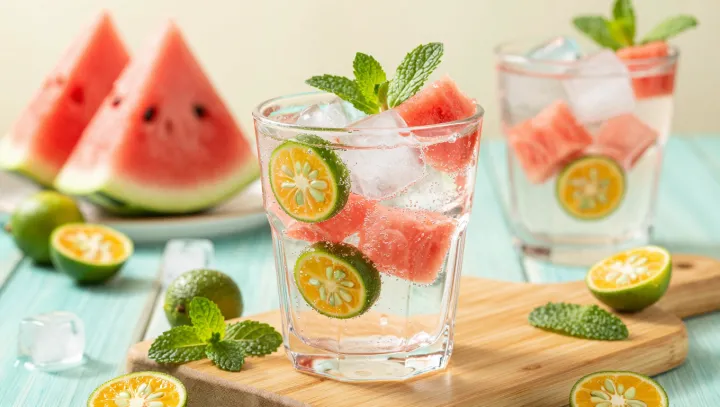
Lime supplies contrast, not sweetness. A squeeze changes watermelon juice because its citric acid shifts the relationship between the fruit's existing sugars and its acidity, giving an otherwise soft-tasting drink a sharper edge. The sugar stays put. What changes is the impression of each sip, not a sudden increase in the watermelon's sugar content.
Balance beats extra sugar. Watermelon contains fructose, glucose and sucrose, while lime contributes acidity that can make the same juice seem less cloying without removing those sugars. Sourness has its limits. Because sweetness and sourness interact in perception, adding acid does not reliably make a drink taste sweeter; at higher levels, sourness can suppress perceived sweetness. Measurement needs two lenses. Whereas pH describes hydrogen ion activity, titratable acidity measures the acid neutralized to a specified endpoint, offering another way to characterize a juice's acid content. Neither measure tells the whole sensory story.
Restraint makes the difference. Since melons vary in ripeness and sugar content, a fixed dose of lime can improve one glass yet overwhelm another, making gradual addition more useful than a rigid formula. Start with a little. Taste after stirring, then add more only if the juice still feels heavy or lacks the tartness you want, rather than assuming every glass needs the same treatment. The reward is contrast. In the glass, the watermelon remains itself, but its sweetness now has an edge against which to be noticed.