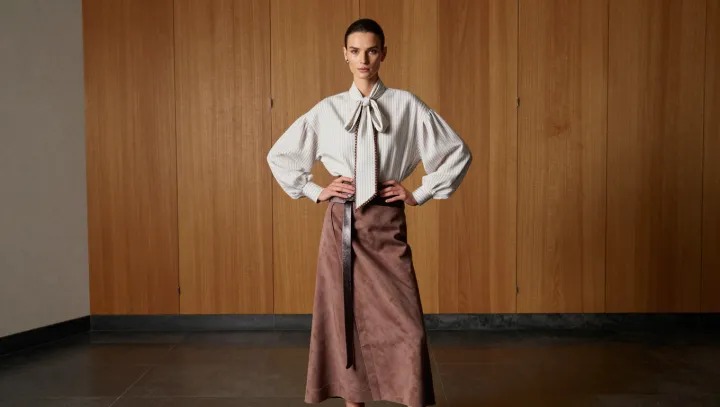
The pairing borrows memory. A striped shirt above a brown maxi skirt can suggest vintage dress because the arrangement recalls familiar outfits, rather than because either ingredient carries an age. Neither piece owns history. The impression comes from their relationship: patterned fabric meeting an earthy colorway, with a long hem that gives the whole silhouette a recognizable, slightly nostalgic bearing.
Proportion does the persuading. When a shirt sits close to the body or tucks into a defined waistband, the contrast with a sweeping skirt can recall older casual wardrobes without reproducing any single outfit. Details sharpen that association. Fine stripes, a softened knit, and a skirt with drape may encourage the reading, while a boxy technical top or rigid fabric can push the same combination elsewhere. Brown is no timestamp. Its effect depends on neighboring textures and shapes, just as stripes can belong to nautical clothing, everyday basics, or sharply contemporary designs without contradicting themselves.
Accessories can rewrite everything. Leather boots, a narrow belt, or a worn shoulder bag may reinforce the nostalgic suggestion, whereas sculptural footwear and a crisp oversized shirt can make the pairing feel current. Authenticity is another question. Newly made clothes can look vintage, and genuinely old garments can look current when their proportions and finishing details meet present tastes rather than familiar images of the past. The distinction rewards restraint. Beneath the stripes, the brown skirt need only move across the floor for an outfit made in the present to cast a shadow that seems older than its cloth.