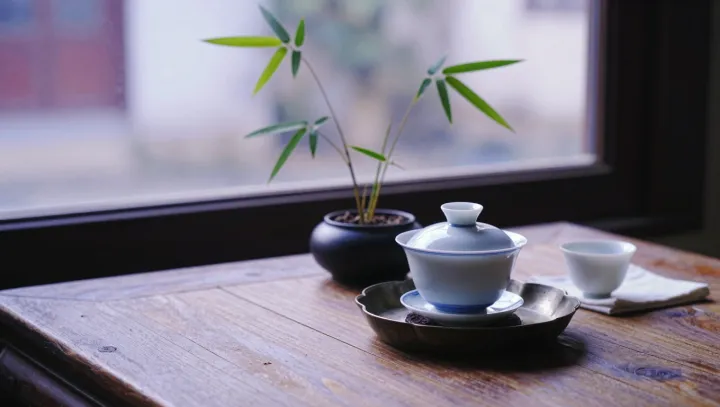
A strainer is not mandatory. A bamboo tea bowl can retain most leaves without an internal mesh because its slightly displaced lid creates a narrow outlet through which the liquid escapes. The gap does the work. Rather than adding another component, this arrangement makes the lid serve two purposes: covering the infusion and controlling what leaves the bowl.
Simplicity deserves some credit. The mechanism is size exclusion: leaves larger than the opening tend to remain inside, while gravity carries the tea through the space between the lid and rim. Precision still matters here. An opening that is too generous gives leaves an easier exit, whereas one that is too tight restricts flow and may make the pour awkward. Leaf size sets limits. Whole leaves are generally easier to retain than small fragments, so this method should not be mistaken for fine filtration or a guarantee of sediment-free tea.
Extra hardware can be unnecessary. For anyone using such a bowl, the useful adjustment is the lid position, which changes the outlet without requiring a separate perforated insert or basket. Practice should start cool. Rehearsing with cool water allows the grip and pouring angle to be checked before hot liquid introduces a burn risk, especially if the exterior becomes uncomfortable to hold. Small fragments may escape. A separate fine sieve remains an option for drinkers who dislike them, but it answers a different preference rather than correcting a missing part. The apparent omission is the design: a lid held slightly aside, leaving just enough room for tea.