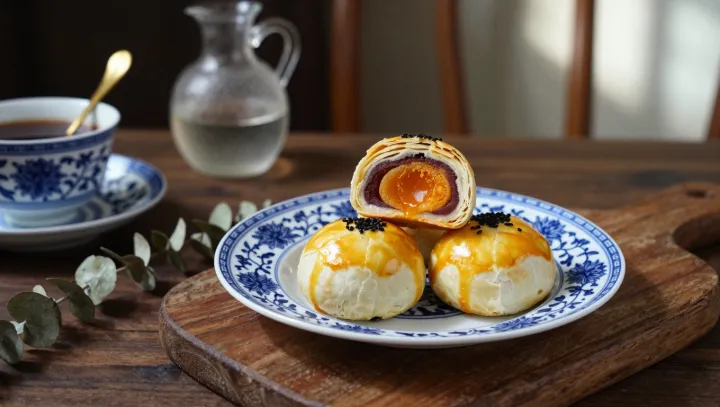
More butter misses the point. The flaky shell of a salted egg yolk pastry depends on lamination, the arrangement of dough and fat-rich layers that remain distinct rather than merging into a heavy casing. Separation earns the crunch. When those boundaries survive shaping, moisture can become steam during baking, helping lift the layers apart.
Gentleness beats brute force. In preparations that wrap a flour-and-fat dough inside a water-based dough, rolling and folding distribute the inner mixture into thin barriers that interrupt contact between the surrounding sheets. Resting protects that work. Because gluten develops in the hydrated dough and resists stretching when tense, a covered rest makes rolling easier without requiring pressure that could tear or smear the layers. Thickness still needs discipline. Uneven rolling leaves thick patches beside fragile ones, so the shell may bake with dense sections even when the recipe contains plenty of fat.
Temperature deserves more attention. Fat must stay workable enough to spread without leaking, while the dough needs protection from drying, which can make its surface crack during shaping around the filling. Extra fat buys little. If it escapes or becomes unevenly distributed, adding more cannot restore the orderly boundaries that allow steam expansion and subsequent drying to produce crisp sheets. Baking finishes the argument. A properly preheated oven and sufficient baking time let the shell set and shed moisture, although exact settings depend on pastry size, filling and recipe. The evidence is audible. Beneath the first bite, the shell breaks into fragments rather than surrendering as one solid wall.