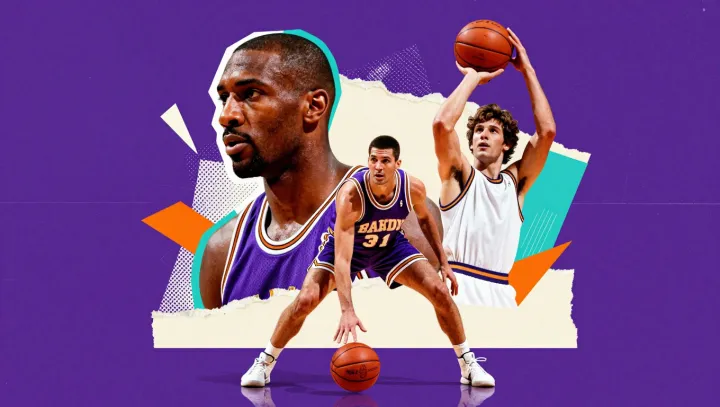
Predictability was no protection. Utah's Stockton-Malone pick-and-roll was difficult to stop because knowing the opening action did not tell defenders which ending its two operators would choose once the defense committed. The screen posed questions. Go under it, chase over it, switch assignments or send two defenders toward the ball: each answer exposed something else.
The partnership punished hesitation. Malone's strength made his screens difficult to negotiate, while his ability to roll toward the basket or pop into a midrange jumper prevented the defending big man from simply camping near the rim. Stockton supplied the precision. He could change pace, keep his dribble alive and delay the pass until a defender's movement revealed whether Malone, a teammate or his own shot offered the better opportunity. Switching carried its own bill. A smaller defender could be left wrestling Malone inside, while a slower big man had to contain Stockton away from the basket.
Repetition sharpened their deception. Under Jerry Sloan, familiar spacing and practiced timing let the pair adjust screen angles, reject a screen or run the action again without rebuilding the possession from scratch. Help was not free. When weak-side help moved toward Malone, Stockton could redirect the ball to an available teammate, making a nominal two-man action a problem for all five defenders. It was never invincible. Physical coverage and disciplined rotations could disrupt it, but recognition alone could not supply the positioning, speed and coordination required to erase every option. The trap was seeing the door and still having to choose which hinge to guard.