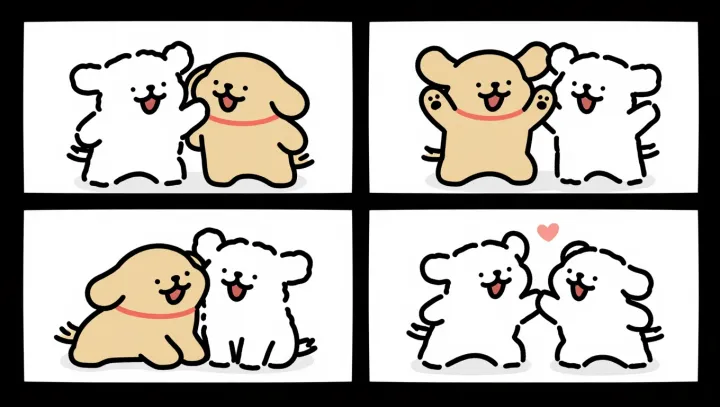
Tenderness needs less explanation. Four comic panels can make affection feel unusually intimate because the spaces between them leave readers to imagine the small, unannounced acts that connect one visible moment to another. Absence does the work. Rather than documenting every gesture, the strip offers enough evidence for an emotional connection while declining to spell out its entire history.
The omission earns feeling. In comics vocabulary, closure describes the reader's construction of continuity from separate images, while the gutter is the space across which that construction often happens. Consider a hypothetical sequence. A cup sits untouched, a hand moves it closer, another hand accepts it, and the final panel returns to the table, where two cups now stand together. Little has been declared. Yet the arrangement invites an inference of attention, because someone noticed a need and acted without requiring a speech, a dramatic embrace, or even an explicitly grateful reply from the person receiving that care.
Restraint also protects ambiguity. The same sequence might suggest friendship, reconciliation, or familiar domestic care, depending on facial expression, framing, and what the reader brings to the page. Not everything goes, however. Repeated objects and changes in posture constrain interpretation, allowing the missing action to feel recoverable rather than merely absent from an unfinished story. That distinction rewards attention. By letting readers supply the pause before acceptance, a comic makes them participants in the gesture: the hand remains ink, but the hesitation belongs partly to whoever is looking.