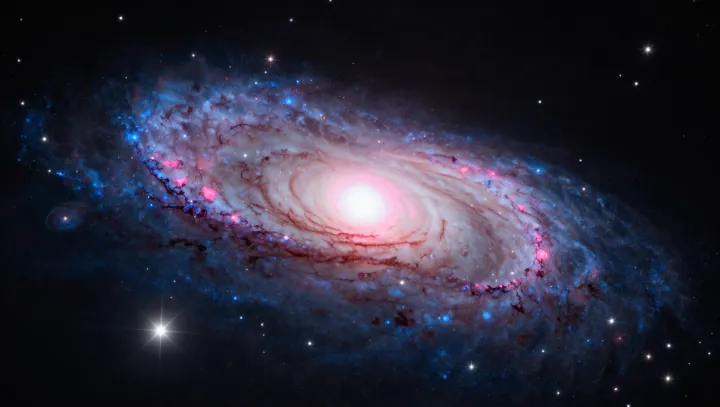
Abundance is not evidence. The Milky Way contains hundreds of billions of stars, but that census tells us neither how often life begins nor whether its traces will reach instruments built on Earth. The arithmetic proves little. Even if planets are common, counting possible homes cannot establish how many are inhabited, especially when the transition from chemistry to biology remains an unanswered scientific question.
Earth offers limited reassurance. Its organisms establish that abiogenesis, the emergence of life from nonliving chemistry, occurred at least once, yet a single example cannot reveal whether that process is commonplace or extraordinarily unlikely elsewhere. Survival adds another filter. A planet can orbit where liquid water is possible without possessing water, a suitable atmosphere or conditions that remain hospitable long enough for organisms to persist. Intelligence is another question. Even widespread microbial life would not guarantee civilizations that build transmitters, operate them for long periods or send signals detectable across interstellar distances.
Silence is easily oversold. Radio searches cover only portions of the sky, frequencies and observing windows, while spectroscopy can examine some planetary atmospheres without necessarily distinguishing biological gases from those produced by nonliving processes. Distance compounds the problem. Signals weaken as they spread, and light takes so long to cross the galaxy that two civilizations could exist without their detectable transmissions ever coinciding. Absence remains an observation. Across that crowded darkness, the unanswered question is whether the windows are empty, or whether our instruments have only just begun to face the glass.