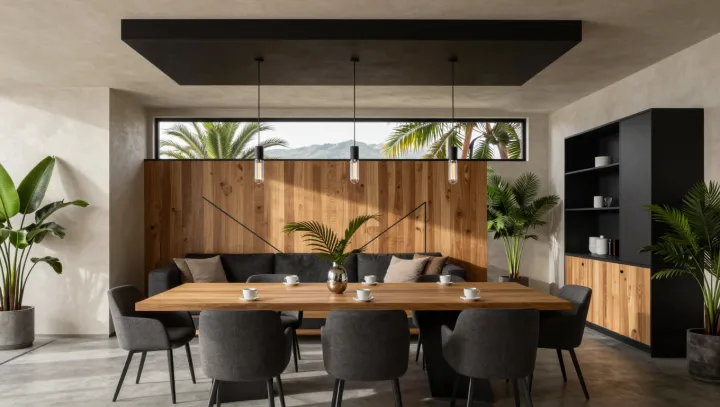
The walls are innocent. A room can feel cramped because furniture interrupts the view from its entrance, concealing the floor and shortening the visible distance between doorway and window. Size is not destiny. Before any demolition is considered, a change in placement can expose depth that was already there, without adding a single square foot.
Empty space earns its keep. When a tall cabinet blocks a window or a sofa back cuts across the entrance, visual occlusion hides the surfaces through which the eye reads distance. Lower furniture reveals more. A chair with exposed legs can leave floor visible beneath it, while a low console preserves a longer view than a towering storage unit in the same position. Placement beats automatic downsizing. Several small pieces may scatter obstacles across a room, whereas one appropriately scaled sofa can leave a continuous walking route and a less interrupted view.
Walls need not collect furniture. Pulling a sofa slightly forward can improve circulation when it creates a usable route behind it, though the same move can waste space where clearances are already tight. Test before buying anything. From the doorway, check whether furniture blocks the window, whether doors open freely and whether reaching a chair requires a sideways shuffle, then adjust one piece at a time. Comfort must survive rearrangement. A room has gained little if its newly exposed floor comes at the expense of a reachable table or a comfortable seat; the better result is a view that travels farther than the feet.