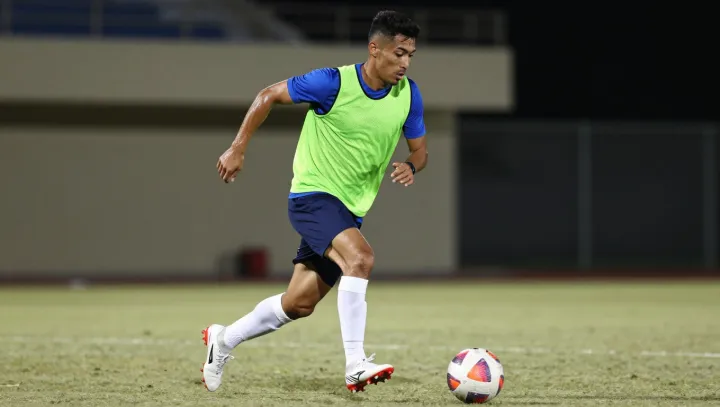
Ronaldo's first weapon is absence. Before a cross arrives, his movement can force defenders to choose between watching the ball and tracking the player slipping beyond their sight, creating an advantage that no touch could manufacture alone. Space becomes the prize. His blind-side runs exploit that divided attention, giving the passer a target before the marker can reset.
The sprint is often secondary. More revealing is the pause or step away from goal that precedes acceleration, because a defender who follows that initial movement must reverse direction while Ronaldo is already attacking the delivery. That hesitation buys separation. By curving his run between centre-back and full-back, he can complicate marking responsibility, especially when each defender expects the other to take him. Timing beats raw speed. Arriving as the passer prepares to release the ball reduces the defender's recovery window, while a double movement can turn an apparently covered forward into an available receiver.
Even unrewarded runs earn returns. A near-post burst can pull a centre-back toward goal, leaving a teammate room for a cutback, while a movement behind the defensive line can discourage defenders from stepping toward the ball carrier. The passer gains options. These effects depend on the delivery, defensive organisation and teammates' positioning; a run does not automatically produce a chance, but it can alter the choices available to everyone nearby. Watch the abandoned space. There, before possession reaches Ronaldo, lies the quieter contest: a defender guarding yesterday's position while the ball travels toward tomorrow's opening.