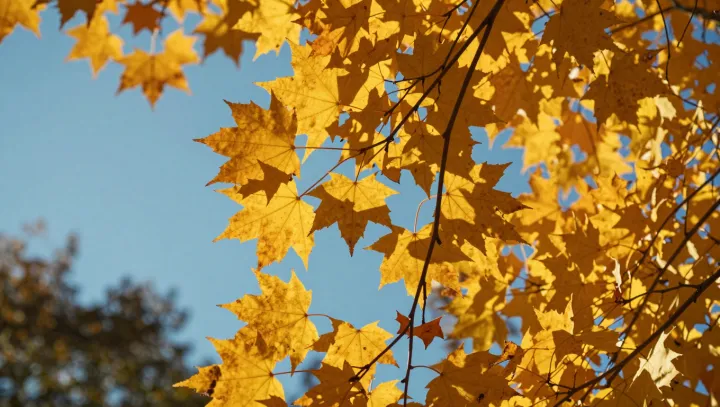
Yellow is an unveiling. Red, in many autumn leaves, is a manufacturing expense: while yellow carotenoids were present through summer, some trees synthesize red anthocyanins as their leaves approach death. The distinction matters. Autumn color is not one chemical event, but the visible result of pigments disappearing, persisting, or being newly produced.
Green has been hiding competitors. During summer, abundant chlorophyll masks carotenoids, which help capture light and dissipate excess energy within the machinery of photosynthesis. Shorter days change priorities. As seasonal signals trigger leaf senescence, chlorophyll production declines and existing molecules break down, exposing yellow pigments that generally persist longer. Yellow needs no fresh paint. Orange can also emerge from carotenoids, although the final shade depends on pigment mixtures, their concentrations, and how far the leaf's internal dismantling has progressed before it falls.
Red poses the harder question. Anthocyanins accumulate in cell vacuoles, often when bright days and cool, nonfreezing nights favor sugar accumulation and pigment production in species capable of making them. Protection offers one explanation. By screening incoming light, these pigments may reduce photoinhibition while aging leaves recover nitrogen and other nutrients for storage in branches, trunks, and roots. The explanation remains incomplete. Benefits vary among species and conditions, and proposed roles include antioxidant activity and effects on herbivores, rather than a single purpose established for every red leaf. Not every tree pays. On one branch, yellow marks what remains; on another, red marks an investment made just before departure.