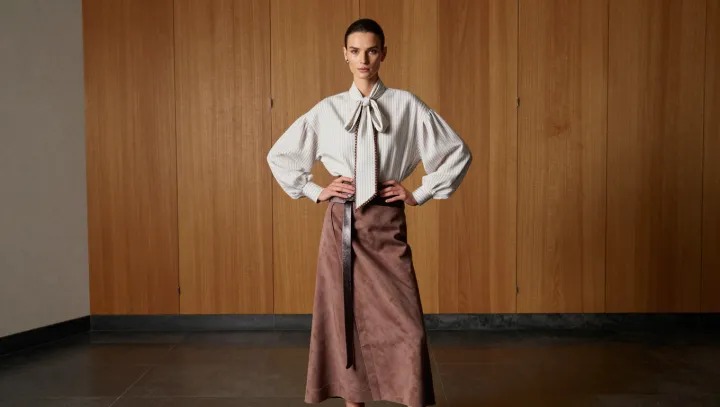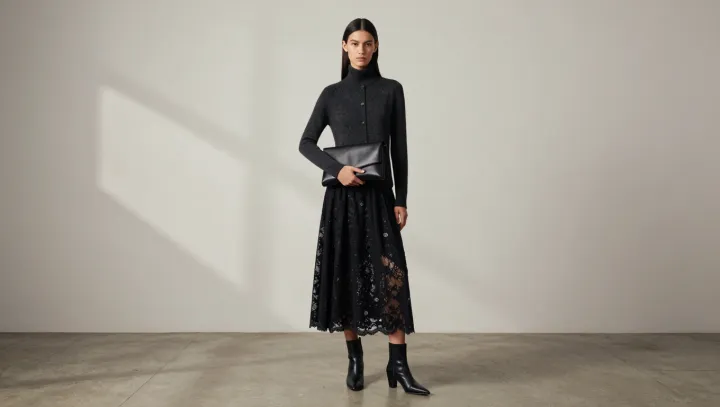
Definition beats total concealment. A fitted black top paired with a flowing long skirt can create a slimmer impression because the waist remains readable while the fabric below reveals less of the body's outline. Contrast does the work. Rather than erasing the figure, the combination gives the eye one clear boundary and lets the rest recede.
Fit deserves more credit. Although black can make shadows and surface details less noticeable, a top that follows the torso without pulling establishes the upper body's shape more clearly than an oversized layer does. Tightness offers no guarantee. When fabric stretches across the bust or gathers above the waistband, those tension lines can attract attention instead of delivering the smooth outline the outfit promises. Placement changes the balance. A waistband near the natural waist, with the top tucked or ending cleanly above it, can make the division between torso and skirt look deliberate rather than accidental.
Movement matters more than volume. A skirt with drape and sufficient ease can fall away from the hips, whereas stiff fabric or excessive gathers may add visible width despite covering more skin. Coverage is not camouflage. An A-line cut often supplies room without clinging, but the result still depends on fabric weight, waistband construction, and how the garment settles on your particular body. The effect stays visual. No body has been reduced; in the stillness between steps, the waist supplies the punctuation while the hem leaves the sentence open.