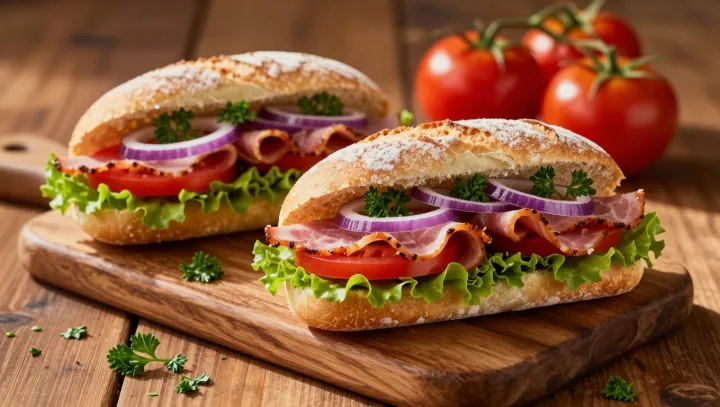
Placement beats extra cheese. A slice pressed against the bread can delay sogginess because it interrupts direct contact between the absorbent crumb and fillings that release water, such as tomatoes or pickles. The middle offers less. There, cheese leaves the bread exposed to juices that can enter its pores without crossing another layer.
Bread is an eager sponge. Its connected pores draw liquid inward through capillary action, while differences in water activity can also drive moisture migration between sandwich ingredients. Cheese adds some resistance. Its relatively dense protein-and-fat matrix lacks bread's open pore network, and its fat-rich regions resist wetting, so an intact slice can slow the route from filling to crumb. Coverage matters more than thickness. Gaps, shredded pieces and uncovered edges allow liquid to bypass the cheese, which explains why a continuous slice against each piece of bread generally offers better protection than a pile in the center.
The barrier has limits. Cheese contains water itself, and a soft, high-moisture variety may contribute dampness rather than provide the resistance expected from a firmer slice. Nothing here is waterproof. Given enough contact time, moisture can still move through the cheese or around its edges, especially when abundant filling juice collects inside the sandwich. Preparation still earns its keep. Draining pickles, blotting tomato slices and cooling cooked fillings reduce the water available to migrate, while cheese beside both bread slices supplies another obstacle. Between the tomato and the crumb, a modest slice buys the bread a little silence.