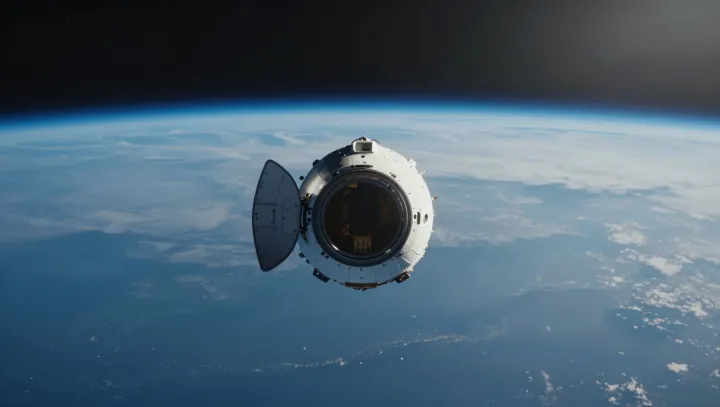
Intelligence is the wrong contest. On some space missions, robots can replace astronauts without matching their judgment, because machines require neither breathable cabins nor food, and their assignments need not include bringing the explorer home. Survival carries its own freight. Every oxygen tank, pressure vessel, and meal adds launch mass, while a return journey demands propulsion hardware and propellant that an expendable probe can leave behind.
Absence becomes an engineering advantage. Without environmental control and life support systems, a spacecraft can devote more of its mass and electrical power to instruments, although thermal regulation remains necessary because electronics also have operating temperature limits. Distance strengthens the bargain. Where communication latency prevents immediate instructions, onboard autonomy lets a rover assess hazards and choose movements without waiting for every command from Earth, rather than reproducing the full intelligence of its operators. Machines still pay rent. Radiation can damage circuits, dust can impair mechanisms, and a failed component may end work that an astronaut could have repaired.
Human judgment retains its price. Astronauts can improvise during unfamiliar failures and revise field investigations on the spot, but those abilities must justify the equipment and safeguards required to keep their owners alive. Not every destination warrants passengers. For radiation measurements, reconnaissance, and many surface surveys, a purpose-built robot offers a defensible trade: less flexibility in exchange for fewer biological obligations and no requirement to rescue its crew. The empty seat matters. Beyond the reach of a practical rescue, a machine can continue taking measurements where sending a person would also mean sending an obligation to bring someone back.