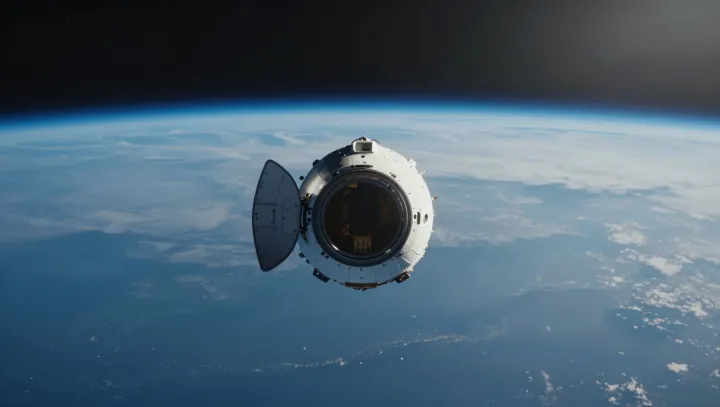
Outside is the sensible choice. Cargo Dragon carries station solar arrays in its unpressurized trunk because hardware built to operate in vacuum does not need the atmosphere provided for cabin cargo. Pressure would buy little. The split lets one spacecraft deliver equipment destined for the station's exterior alongside experiments and supplies that astronauts unload inside.
Packing follows the destination. The ISS Roll-Out Solar Arrays, or iROSAs, travel as compact rolled assemblies on support structures, which secure them against launch loads until the station's robotic arm retrieves them. Size matters as well. Their dimensions and handling requirements suit the trunk's external cargo accommodation rather than a route through the docking hatch and station passageways. Deployment comes after delivery. Once positioned and installed through robotic operations and spacewalks, the arrays unfurl using stored strain energy in their composite booms, exposing photovoltaic cells that convert sunlight into electricity.
The cabin earns its atmosphere. Food, crew supplies and many research payloads travel within a pressure vessel, where cargo can receive environmental protection and become accessible to astronauts after docking. Not everything needs air. Individual experiments may have additional containment or temperature controls, but the cabin provides a protected transport environment rather than exposing those shipments directly to space. Return tickets differ too. Dragon's capsule can bring research samples and equipment back to Earth, whereas the trunk is discarded before reentry and burns up, making it suitable for outbound hardware that will remain aboard the station. Two destinations, one spacecraft. At the hatch, the shipment divides: some cargo enters the laboratory, while some becomes part of its skin.