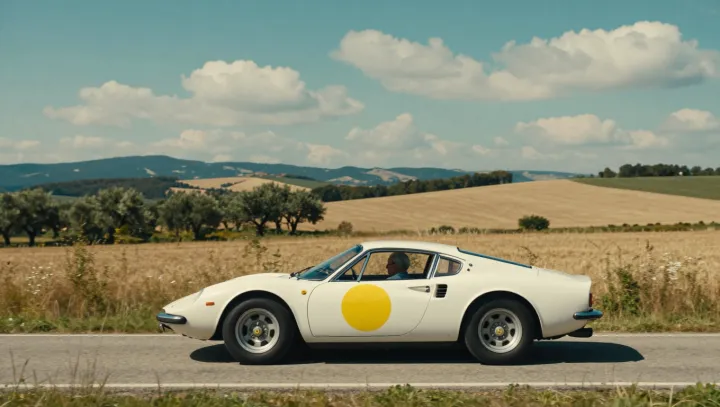
Stillness tells only half. Ferrari's Cavalcade Classiche is not a race, but its decision to put historic Ferraris on the road makes a pointed argument: cars explain themselves differently when they move. Museum glass has limits. Where a display preserves an outline, a road outing restores the relationship between machinery, movement and the purpose for which a car was built.
Motion supplies missing evidence. A historic Ferrari's chassis and powertrain are not merely objects to inspect; they are working systems whose interaction becomes easier to understand when the car is driven rather than parked. Appearance is only shorthand. Bodywork can suggest speed, but movement reveals how a vehicle occupies the road, turning an admired shape into something with weight, sound and mechanical demands. Competition would change that. By keeping racing outside its purpose, Cavalcade Classiche gives attention to the cars themselves, rather than making their significance depend on finishing positions or the pursuit of a faster lap.
Preservation need not immobilize. Driving introduces wear and requires care, yet keeping every historic car stationary also withholds part of the experience that makes such machines worth preserving. Neither choice is free. The event's appeal rests on that tension, offering an encounter with Ferrari history that a collection of polished surfaces cannot fully provide. Heritage becomes an activity. For spectators, the distinction is simple: these cars are not being asked to defeat one another, but to remain recognizable as cars, with their mechanical purpose still intact. Beyond the glass, history has somewhere to go.