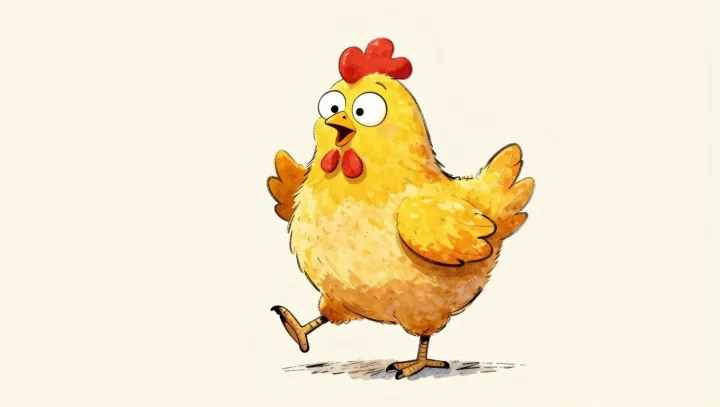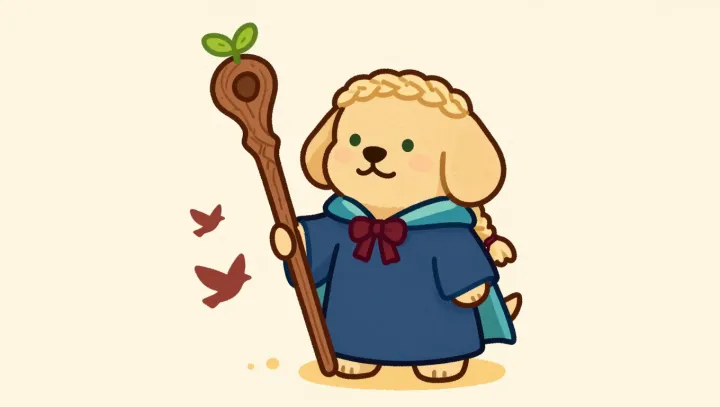
The bird needs no magic. While the puppy's staff belongs to fantasy, the bird's flight depends on a measurable exchange: its wings push air downward, and the air exerts an upward force on the bird. Physics supplies the lift. Beneath the apparent ease of feathers in motion lies Newton's third law, which requires forces between interacting bodies to come in equal and opposite pairs.
Wing shape deserves less mystique. Although curved wings help establish the airflow that produces lift, flight does not require air passing above and below a wing to reunite at its trailing edge. That story misleads readers. Pressure differences across the wing and the downward deflection of surrounding air describe connected aspects of the same aerodynamic process, rather than competing explanations for why a bird remains airborne. Momentum keeps the accounts. In steady, level flight, the bird must transfer enough downward momentum to the air for its average lift to balance its weight.
Gliding is no loophole. Even without flapping, a bird moving through the air can generate lift, while its gradual descent or rising air supplies the energy needed to offset aerodynamic drag. Flapping changes the bargain. Muscles supply energy as the wings change position and angle, producing the forces needed to support weight and, when required, drive the bird forward against air resistance. The contrast rewards attention. Beside the puppy's imagined instrument of power, the bird carries no exemption from gravity, only feathers arranged to make the surrounding air bear its weight.