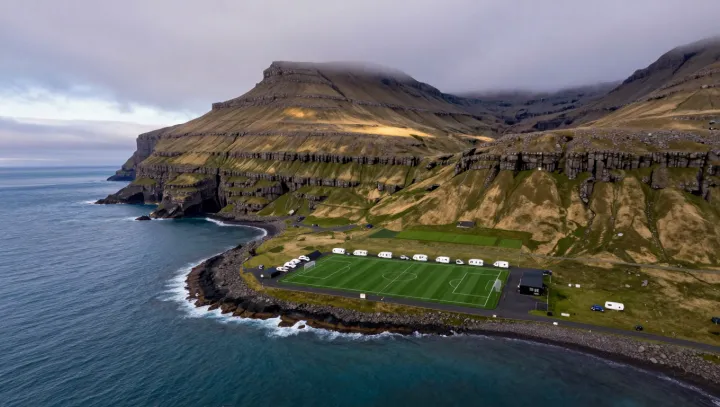
Perfect flatness is overrated. A sports field framed by steep mountains can appear level while carrying a slight surface slope, which gives rainwater a route away rather than leaving it trapped in shallow depressions. The eye misses it. Against cliffs and ridgelines, that modest difference in elevation is easily overlooked, though gravity responds to it without any such hesitation.
The tilt earns space. Depending on the sport, surface and drainage design, a field may use a crown, with its center raised above its edges, or a consistent fall toward one side. Gravity supplies the push. The resulting hydraulic gradient helps move surface runoff toward collection points, while infiltration allows some water to enter the soil or engineered layers below the playing surface. Geometry has its limits. If rainfall arrives faster than water can infiltrate or leave through available outlets, even a carefully graded field can develop puddles, particularly where wear or settlement creates hollows.
Slope alone is insufficient. Compacted soil can restrict infiltration, and blocked drains can prevent collected water from escaping, so the visible turf tells only part of the engineering story beneath a match. Maintenance protects the design. Grounds crews must preserve surface levels and drainage routes without introducing gradients that conflict with the sport's requirements for footing, ball movement or player safety. The deception remains useful. Beneath the apparent stillness of a field held against mountains, a small difference in height quietly gives falling water somewhere else to go.