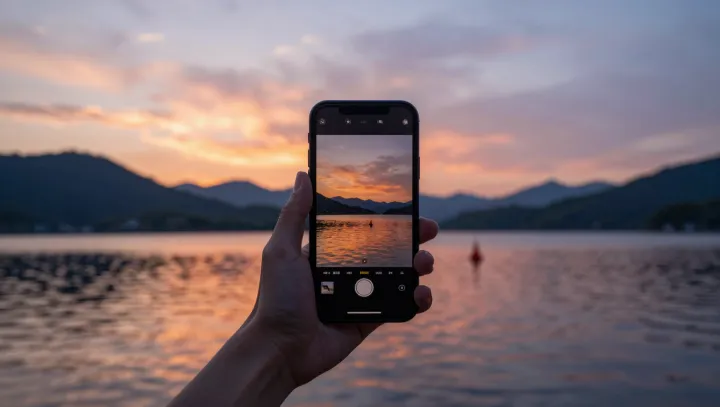
The moment is plural. A phone's night photograph can look like a single exposure, although its software may assemble several frames captured over an interval rather than at one instant. Darkness invites this bargain. Through multi-frame fusion, the camera combines evidence from separate exposures, allowing faint surfaces to emerge without relying entirely on one long exposure that could blur with movement.
Repetition earns its keep. Because photon shot noise reflects random variation in arriving light, combining suitably aligned frames can improve the signal-to-noise ratio, making genuine scene detail easier to distinguish from speckles. Nothing comes entirely free. The software must estimate how frames correspond, compensating for hand movement while deciding which differences represent noise and which belong to moving objects within the scene. Motion complicates the arithmetic. A face that turns or a branch that sways can leave ghosting, softened texture, or patches where the system favors one exposure over the others.
Brightness can flatter reality. Some systems also combine shorter exposures that preserve bright areas with longer ones that collect more light from shadows, then adjust local contrast for the final display. Restraint still rewards you. Holding the phone steady and keeping subjects still gives the software more consistent evidence, though the result still depends on available light, camera hardware, and processing choices. The picture remains interpretive. Beneath a convincingly quiet night scene lies a small stretch of elapsed time, folded until the streetlight and the doorway appear to have shared one breath.