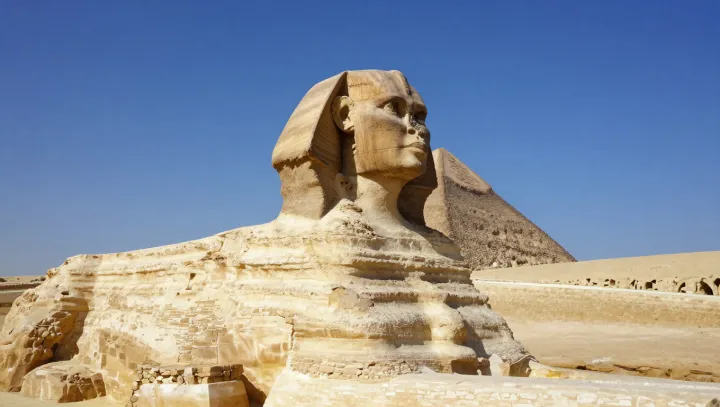
Burial helped save the Sphinx. The sand that repeatedly swallowed much of its lion's body also shielded the limestone from windblown abrasion, while the exposed head remained visible above the dunes. Carved from bedrock at Giza, the monument endured not despite every bout of burial, but partly because of it.
Protection came with a price. The Sphinx is carved from limestone layers of differing hardness, and its body bears deep erosion where weaker stone has worn away more readily. Salt crystallization can also damage porous rock: moisture carries dissolved salts into the stone, and growing crystals exert pressure as water evaporates. Sand does not make the monument invulnerable. It can shelter buried surfaces from wind, yet moisture and salts can still threaten the stone. The exact history of the erosion remains debated, and no single process accounts neatly for every groove.
Human intervention matters as much as any natural shelter. Ancient restorers cleared sand and repaired the monument, while later conservators faced the difficult task of stabilizing damaged masonry without trapping moisture or introducing incompatible materials. Some repairs have themselves deteriorated, requiring further work. The monument's survival is therefore not a simple story of stone resisting time: it is a record of exposure, burial, damage and repeated care. Above the sand, a human face holds its place; below it, the lion's body remembers another kind of shelter.