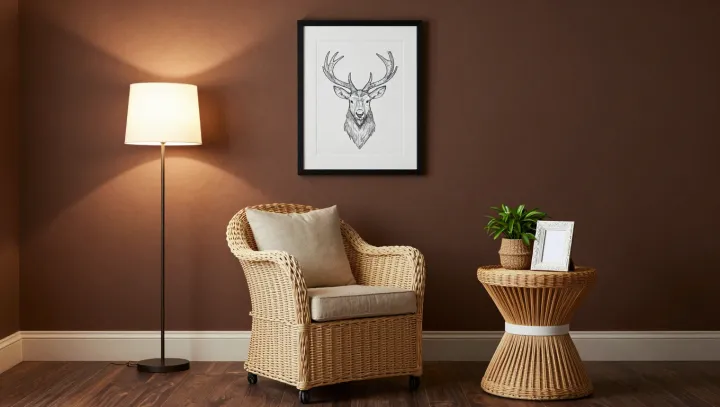
Dark walls give cream furniture a brighter voice. The effect is not a trick of extra illumination: against deep brown, a cream sofa can seem lighter than the same sofa beside a white wall, even when the light falling on it stays the same. The eye reads each surface in company.
Contrast does the work. In simultaneous contrast, the perceived lightness of a surface shifts with its surroundings; a pale object beside a dark one looks lighter than it does beside an even paler surface. The relevant physical measure is luminance, the light reaching the eye from a surface. If the sofa receives the same light and its surface reflects it in the same way, its luminance need not change for its perceived lightness to change. White walls offer a brighter reference, so cream can look subdued by comparison. Context changes the reading.
The most convincing rooms temper that drama. Warm lamps can soften the brown and lend cream upholstery a golden cast, while woven rugs or baskets introduce texture without pulling the palette apart. Lighting placement matters: a lamp aimed at a wall or sofa changes the light each surface receives, adding a real difference to the perceptual effect. Glossy paint can also catch highlights that interrupt the dark background, while matte finishes tend to keep it more even. A few lighter objects repeated across the room can keep the sofa from feeling isolated. Against the brown, cream holds the last light.