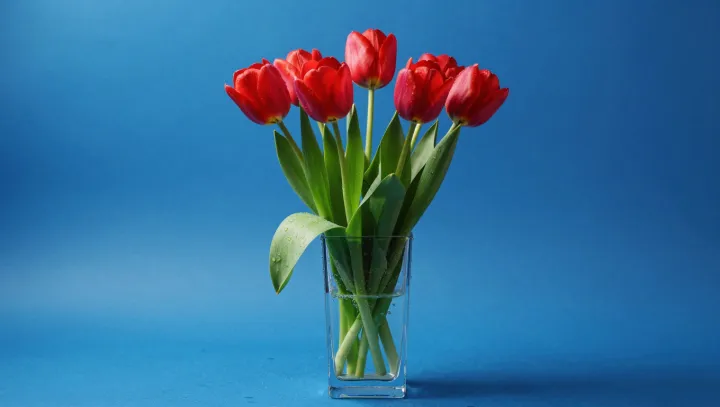
Cut tulips refuse to sit still. Even separated from their bulbs, their stems can lengthen and their flowers turn toward a window, making a carefully arranged vase look rather different later. This is not a flaw in the bouquet; it is evidence that living plant tissue remains responsive after harvest.
A clean vase is the best investment in keeping that movement graceful. Wash it before filling it with fresh, cool water, then trim the stems with a clean, sharp blade before placing them inside. Remove leaves that would sit below the waterline, where decaying tissue can encourage bacterial growth. Check the water often. Replace it and rinse the vase when it becomes cloudy; a fresh trim can help stems take up water. Keep the arrangement cool and out of direct sunlight, away from heaters and ripening fruit, which can release ethylene that hastens aging.
The bending is less mysterious than it looks. Growth continues through cell elongation, supported for a time by water and stored resources in the cut stem. Phototropism, the growth response to light, can cause uneven elongation across a stem; auxin, a plant hormone involved in growth regulation, helps coordinate such responses. Gravity also influences the way stems orient themselves. Turn the vase if you want a more even arrangement, or leave it alone and accept its changing shape. In the shifting outline of a bouquet, the plant's last habits remain visible.