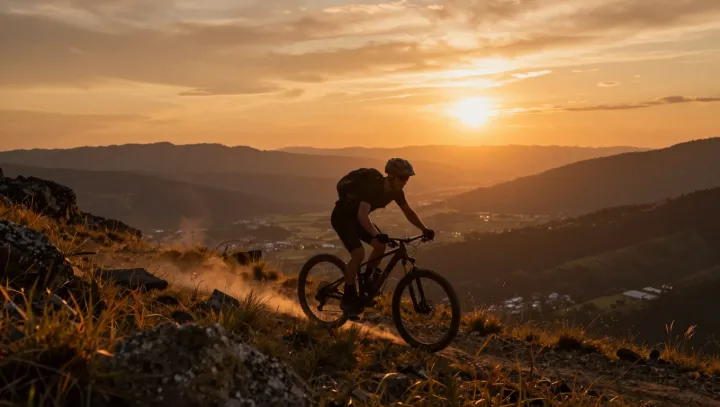
Standing turns a descent into a negotiation between two moving systems: the bicycle and the body. The distinction matters. When a wheel climbs a root or drops into a hollow, bent arms and legs let the bike move beneath the rider instead of transmitting every jolt directly through the saddle.
Inertia makes that separation useful. A rider's body tends to continue along its path while the wheels respond to the ground, and flexed joints provide room for those movements to differ. The arms and legs act as additional suspension, bending and extending as the terrain changes; they do not replace the bike's springs and dampers, but add range and control. Stiff limbs surrender that advantage. With less freedom to move, an impact is more likely to push the rider off balance or deflect the bike.
Balance is more dynamic than simply hanging off the back. Standing gives the rider room to shift the center of mass in response to slope, braking and obstacles, while keeping weight supported through the pedals. Move too far back and the front wheel can lose traction; remain too rigid and sudden braking can pitch the body forward. A level pedal stance, relaxed grip and bent elbows and knees leave space to react, with speed chosen for the rider's skill and the trail ahead. The wheels trace the rough ground; above them, the rider finds a quieter line.