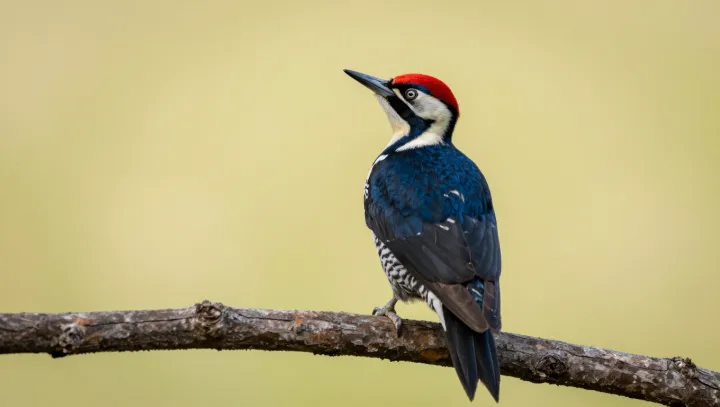
A loose acorn is an invitation to a thief, and acorn woodpeckers know how to close it. As stored acorns dry and shrink, the birds shift them into smaller holes, restoring the tight fit that makes each nut harder to steal. The work never quite ends.
This is food storage with an unusually exacting maintenance bill. Acorn woodpeckers live in social groups and drill holes into trees to create granaries, where they wedge acorns individually. Moisture loss changes the fit. As an acorn shrinks, less pressure against the wood means less friction holding it in place, so a bird must find a better sized hole. A snug fit helps foil other animals looking for an easy meal; it also keeps an acorn from falling out. The granary is not a sealed vault, and a tight fit offers protection rather than a guarantee.
The reward for all that rearranging is a reserve that can outlast the season when fresh acorns are available. Group members gather and store food, tend the granary and defend their territory, making the cache part of a shared survival strategy. That vigilance has a cost. Time spent inspecting and moving acorns cannot be spent gathering new ones, yet leaving a shrinking nut unattended can put the earlier effort at risk. In the tree, each small hole holds a record of food found and work still to be done.