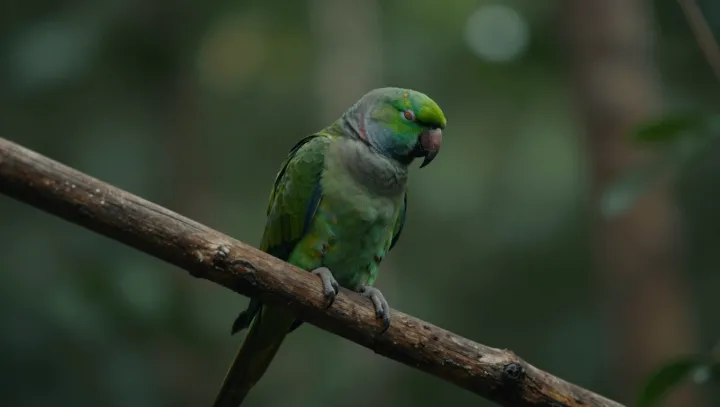
Parrots need no vocal cords to make human words. Their instrument lies deeper. At the junction of the windpipe and the two bronchi sits the syrinx, an organ that turns airflow into sound. With practice and careful listening, some parrots can shape that sound into a remarkably close imitation of speech.
The mechanics are more subtle than a simple whistle. Air from the lungs passes through the syrinx, setting its tissues vibrating; muscles adjust the organ and help control the resulting sound. The tongue and the rest of the vocal tract then modify its resonance, shaping what reaches a listener's ear. Human speech starts differently, with vocal folds in the larynx, but both systems depend on a source of vibration and a tract that filters sound.
The deeper explanation is social. Parrots are vocal learners, able to hear sounds and alter their own calls to match them, an ability shared by relatively few groups of animals. In the wild, learned calls can help birds maintain contact with their flock. A bird living among people may treat household voices as part of its sound environment, copying words alongside whistles, alarms or other noises. Not every parrot talks, and imitation alone does not prove that a bird understands a word as a person does. Yet some can learn to associate sounds with objects or situations. A familiar word, spoken from a perch, can sound like a conversation across a considerable divide.