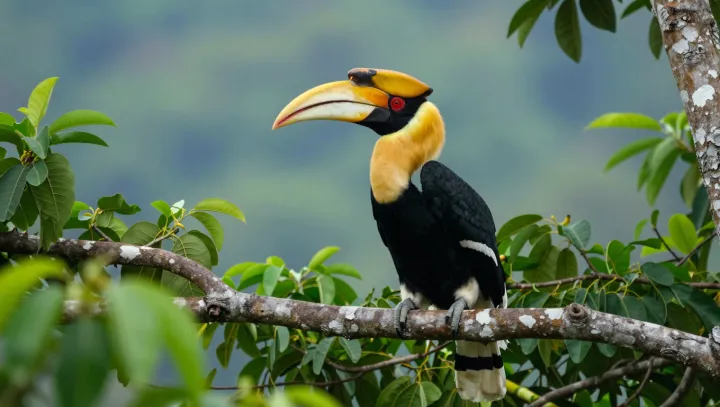
Safety has a price. The female great hornbill nests inside a tree cavity whose entrance she seals with her mate's help, leaving a narrow slit through which he passes food. The barrier limits access for predators, but it also binds the nesting attempt to his ability to keep delivering meals.
The arrangement turns parental investment into an unequal wager. While the female incubates her eggs and broods the chicks, the male forages for fruit and animal prey, carrying it back to the cavity. The slit lets her receive food and expel waste, but it leaves little room for escape. She also molts during confinement, replacing flight feathers while the wall shelters her. If her mate dies or cannot find enough food, the female and chicks face starvation; the same barrier that reduces predation makes their dependence acute.
A nest is only as secure as the forest around it. Great hornbills need large trees with suitable cavities and a supply of food within reach, so the loss of mature forest can undermine both shelter and provisioning. The female can break out of the cavity, and the opening may be sealed again while the young remain inside, but that escape does not erase the risks of a failed food supply. Behind the wall, protection and vulnerability occupy the same small space.