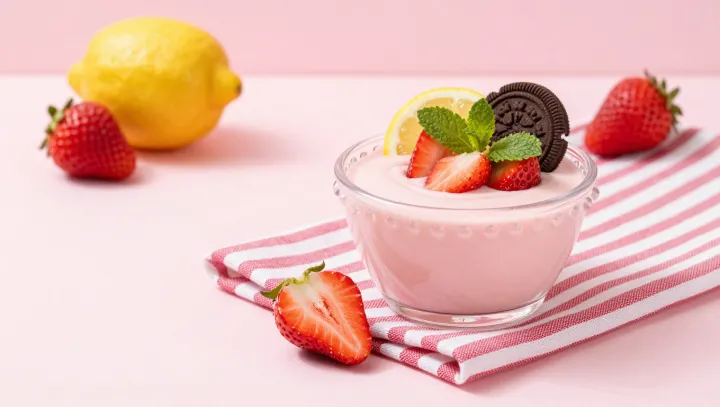
Lemon can make a strawberry dessert seem sweeter without adding a grain of sugar. A little acidity cuts through a creamy pink base, giving fresh berries a sharper outline against the richness. The effect is perceptual, not mathematical: the bowl contains no more sugar because lemon juice has been added.
Balance does much of the work. Sweetness and sourness interact through taste mixture suppression, in which one taste can reduce the perceived intensity of another. The outcome depends on their relative concentrations: too much lemon may make the dessert taste plainly sour rather than sweeter. Aroma matters too. During retronasal olfaction, volatile compounds travel from the mouth to the nose, where they contribute to the flavor experienced while eating. Lemon's citrus aroma can make the berries seem brighter, even though aroma and sweetness are not the same sensation.
The garnish deserves restraint. Fresh strawberries reinforce the fruit flavor, while mint adds a cooling aromatic note and a chocolate cookie supplies bitterness and crunch. Start with a small squeeze of lemon, taste, and add more only if the cream still feels heavy; the right amount depends on the berries and the sweetness of the base. A sour drop can sharpen the pleasure of sugar, but the most revealing spoonful is the one that leaves both flavors in view.