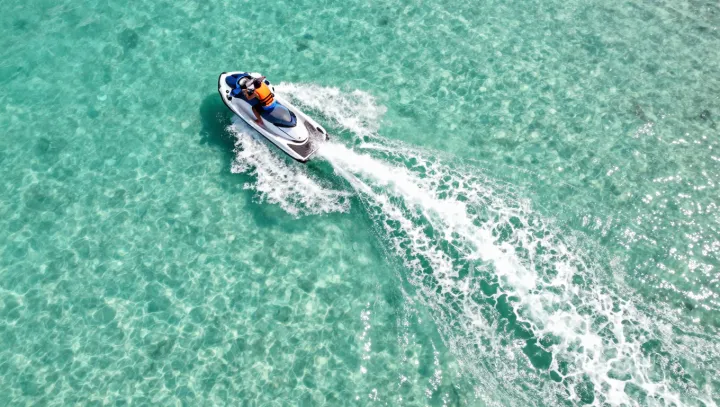
A jet ski turn demands restraint, but a closed throttle can rob the machine of its steering authority. Speed magnifies the force needed to change direction, making a sharp turn more likely to unseat a rider. Slowing down matters. So does keeping enough thrust to guide the craft.
The mechanics are less forgiving than the handlebars suggest. A jet ski uses an impeller to draw water into a pump and expel it through a movable nozzle. Turn the handlebars and the nozzle redirects that stream, producing thrust that pushes the stern sideways and changes the craft's heading. Ease off the throttle and the stream weakens. Steering response can fade. Inertia, meanwhile, carries the craft forward, so it may keep traveling toward an obstacle even when the handlebars are turned.
The distinction between slowing and coasting is where good judgment lives. Reduce speed well before the turn, leave ample room, and use controlled throttle as needed to maintain steering, following the instructions for the particular craft. Some models have off-throttle steering assistance, but their responses vary and they cannot erase momentum or guarantee a tight turn. Practice in open water helps. The safest line is not a last-second maneuver but a choice made while there is still room to make it.