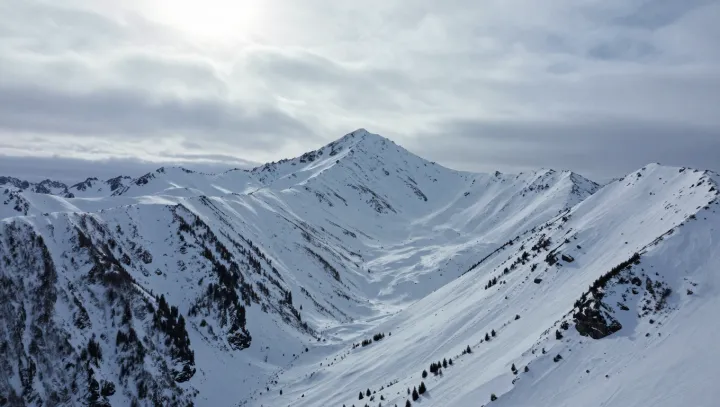
Snow is both armor and accomplice in the destruction of a mountain. Above the scattered trees, smooth white slopes conceal rock that may be spared some of the punishment endured by the exposed bands and steep ridges. Yet the same frozen cover can supply water and ice to processes that slowly pry the mountain apart.
A deep snowpack can be an effective shield. Air trapped between snow grains slows heat transfer, insulating the ground beneath it from sharp swings in air temperature. That matters because repeated freezing and thawing can widen cracks in exposed rock. Snow also intercepts rain and reduces the direct impact of windblown particles, although protection depends on how long the cover lasts and where it settles. The bare ridges tell another story. There, rock faces meet the weather without the same insulating layer.
The mountain's frozen cover can also become an instrument of damage. Meltwater seeps into fractures, and under suitable conditions ice can grow within them, exerting pressure that helps split rock through frost weathering. Not every freeze breaks stone. The effect depends on water supply, temperature and the size of existing cracks. Where snow accumulates and compacts into a glacier, moving ice can drag embedded debris across bedrock in a process called abrasion; it can also pluck loosened blocks away. In the quiet contrast between a white slope and a dark ridge lies a restless bargain: shelter in one place, fracture in another.