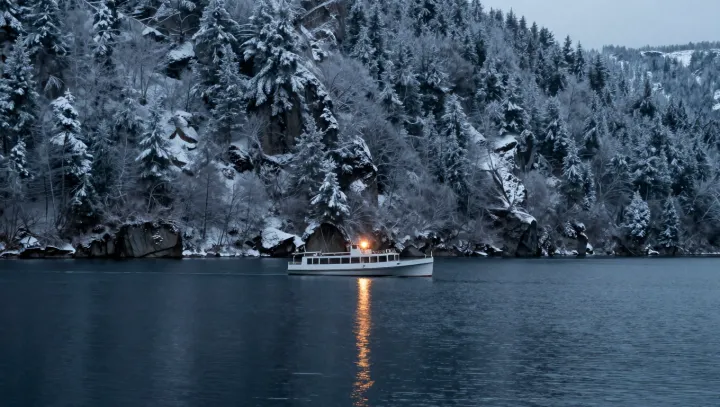
Snow on the trees is no verdict on the water below. A boat can cross an open surface because the forest and the water surrender heat at different rates, even when the same cold air reaches both. Winter does not arrive everywhere at once.
Water has a stubborn memory of warmth. Its high heat capacity means that it can store considerable energy before temperatures fall, while wind and currents can mix warmer water from below into the cooling surface. Fresh water adds another complication: it is densest at about four degrees Celsius, so cooling water tends to sink until the body of water is near that temperature. Colder water then remains near the surface, where ice can begin to form. Depth matters, too. A deep lake generally has more stored heat to shed than a shallow one under comparable conditions.
Cold air alone cannot dictate the freeze. Before water turns to ice, it must release latent heat of fusion; moving water can delay the process by stirring the surface and carrying in heat from elsewhere. Salt lowers the freezing point, while sheltered water can freeze sooner than exposed water because it experiences less wind-driven mixing. Once ice forms, snow resting on it can insulate the water and slow further thickening. The apparent stillness conceals a contest of heat and motion. Beneath the white trees, the boat traces a line through a season that has not yet settled.