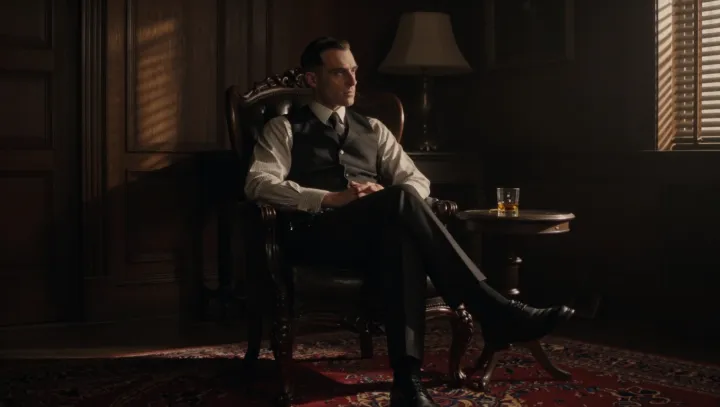
A waistcoat can make a jacketless outfit look formal without making it a suit. The distinction matters. Its fitted front gives the shirt a defined shape, while dark trousers and polished shoes reinforce the impression of care that a bare shirt alone may struggle to convey.
The waistcoat earns its authority through tailoring, not magic. Waist suppression shapes the torso, and the clean drape of the fabric conceals some of the folds that gather in a tucked shirt. A row of buttons creates a visual centre, while the contrast between a dark waistcoat and a light shirt sharpens the outline. Details do the work. Trousers that sit neatly at the waist and shoes with a polished finish carry that discipline below the waist, making the separate pieces read as a considered ensemble rather than the remains of one. A tie can strengthen the effect, but it is not essential to every polished combination.
Appearance, however, is not permission. Traditional suit dress codes generally expect a matching jacket and trousers, and an invitation requiring a suit is not satisfied simply by adding a waistcoat to a shirt. Context sets the limit. At a less prescriptive dinner or workplace, the same combination may look entirely at home; at a ceremony with a stated jacket requirement, it risks looking incomplete. Fit also decides much of the result: a gaping waistcoat or rumpled shirt can undo the neatness that gives the outfit its force. Between looking formal and being formally dressed lies the quiet space where the jacket should be.