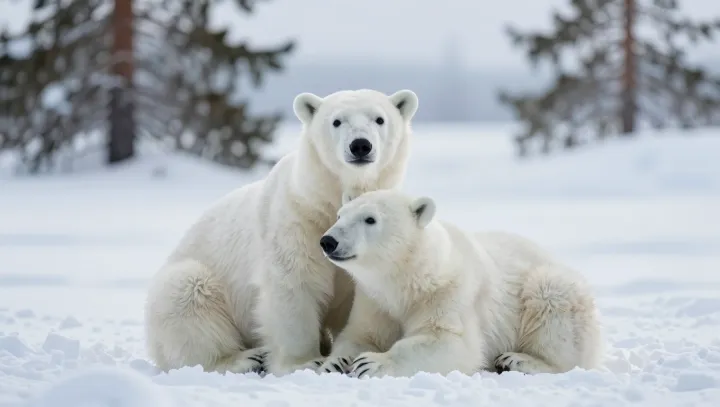
Berries cannot replace seal fat. For polar bears stranded ashore when sea ice retreats, that dietary mismatch turns a familiar image of adaptation into a question of arithmetic: how can a large predator meet its energy needs when its richest prey is beyond reach? Often, it cannot.
The difference is metabolic, not merely culinary. Seal blubber is dense with fat, which supplies more than twice the energy per gram of carbohydrate or protein. Bears can store that energy as adipose tissue and draw on it during lean periods. Berries contain water and fiber, and gathering enough to match a meal of blubber takes time and energy. Eggs, vegetation and carcasses can help individual bears, but their availability is uneven. A feast is not a system. Nor can most bears reliably find enough land food to support their accustomed body size and reproductive demands.
The loss of ice therefore reaches beyond the hunt itself. Sea ice gives bears access to seals at breathing holes and other places where the animals surface; when warming lengthens the ice-free period, bears in affected areas may spend longer fasting ashore. Lower fat reserves can leave females with less energy for pregnancy and nursing, while cubs depend on that stored energy through their mothers. Some populations face different conditions, and individual bears can exploit land foods with varying success. But a shoreline dotted with berries offers a poor substitute for a platform from which to catch seals. The food is visible; the missing meal is offshore.