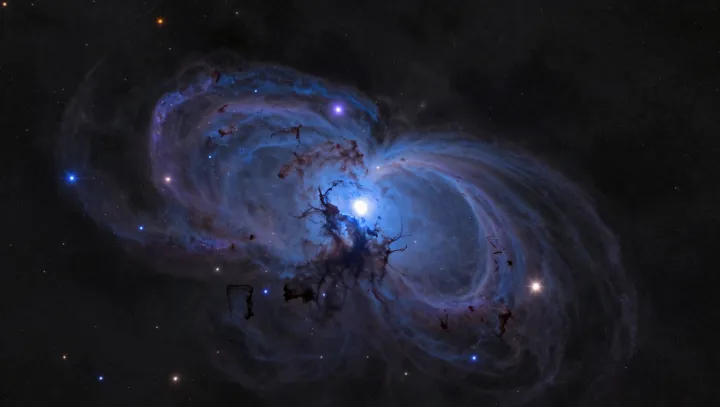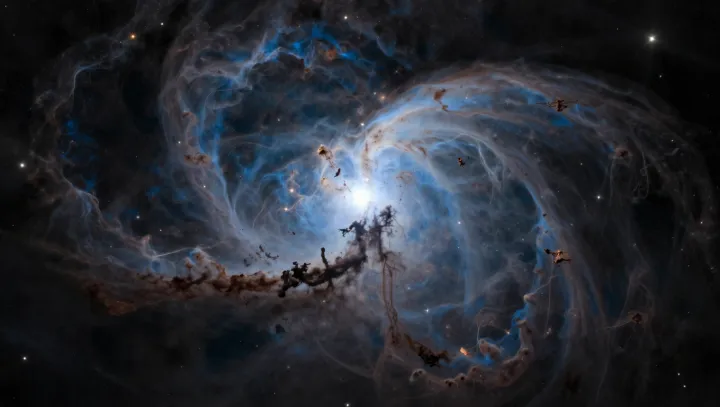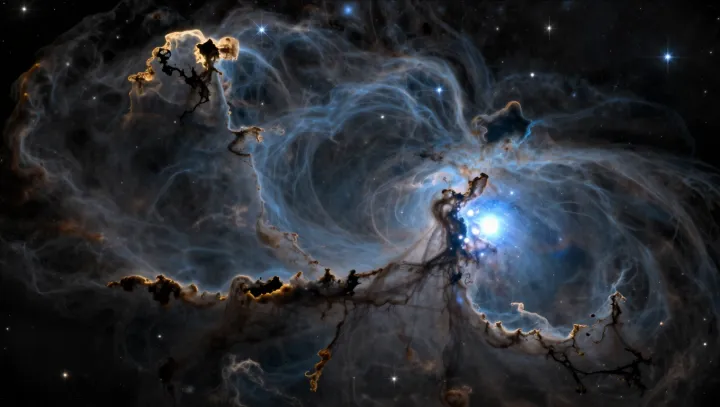
A nebula can be a birthplace and a graveyard, but not because every cloud follows the same script. The word describes gas and dust with several possible origins: some clouds gather between stars, while others are expelled by stars nearing death. Their histories matter. So do the forces acting on what remains.
Birth is less certain than the glowing pictures suggest. In a cold, dense molecular cloud, gravity can pull a pocket of gas inward until a protostar forms; if its core becomes hot and dense enough, nuclear fusion begins. Yet much of the cloud may never make a star. Turbulence, magnetic fields and heat can resist collapse, while radiation and stellar winds from nearby massive stars can strip gas away. Those same pressures can sometimes compress neighboring pockets, making collapse more likely. A nursery, then, is a contest, not a promise.
Death leaves no single kind of cloud. A Sun-like star sheds its outer layers, producing a planetary nebula around its exposed core; a much more massive star can explode as a supernova, scattering debris and heavy elements. Whether that material joins a future nursery depends on its surroundings. Expanding gas may cool and mix with interstellar matter, but it may also remain too thin or hot to collapse. A shock wave can compress an existing cloud, though it can also disrupt one. Between a star's last light and another's first lies no guarantee, only matter awaiting its next encounter.