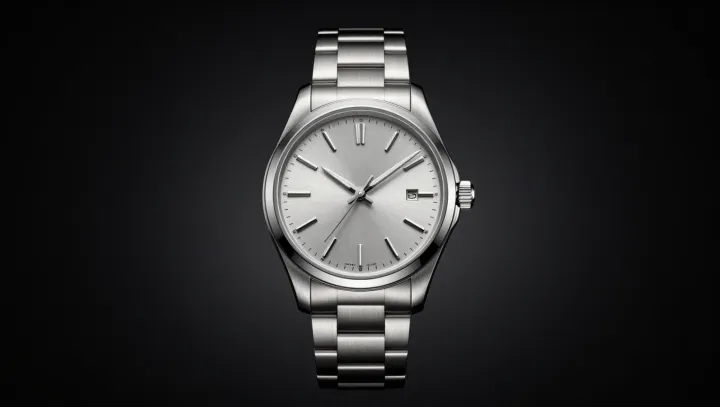
A thick drum bezel still frames the new Tambour, but the watch now wears with a flatter profile and a more even stance on the wrist. The visual signature stays on the perimeter, while mass and height migrate inward, into the movement and case architecture.
Engineers reduce overall thickness by tightening tolerances in the mid‑case and by compressing the sapphire stack, a process rooted in basic stress–strain mechanics. The lugs vanish into an integrated bracelet, which spreads the footprint and removes the gendered look of protruding horns. The dial drops closer to the movement plate, shortening the visual distance between crystal and hands, so the case reads slimmer even where measurements stay similar.
Mechanical sophistication rises through a denser automatic calibre with optimized gear‑train efficiency and more precise isochronism control. Energy transfer in the barrel and escapement follows classic conservation of angular momentum, but with a layout that occupies less vertical space. Branding shifts from oversized case engraving to more restrained indices and typography, so the bold identity lives in silhouette and proportion rather than brute volume, allowing the Tambour to evolve without erasing its origin.