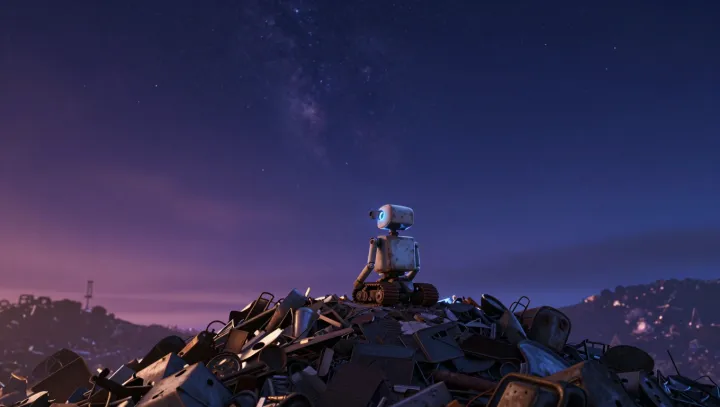
A boxy trash-compacting robot achieves what many solemn science fiction epics do not: a clear, unsettling meditation on how we live and what we throw away. Almost no dialogue, no expository speeches, yet the film builds a world where junk forms the skyline and absence becomes its loudest sound.
By stripping language to a minimum, the narrative removes what economists might call the marginal noise of plot and rhetoric, foregrounding behavior, routine, and waste. The robot’s repetitive labor functions like a visual equation for entropy: every neatly packed cube is swallowed by a larger tide of debris. Consumerism appears not as a villainous CEO but as a systems problem, a feedback loop in which convenience, disposability, and corporate automation erase individual agency and basic social metabolism.
Loneliness sits at the center of this system. The protagonist’s quirks, collections, and longing glances do the work that monologues usually attempt, turning attachment into an observable variable rather than a speech about feelings. When humans finally appear, immobilized in comfort and severed from their own biosphere, the emotional stakes are already priced in. The film arrives at a question most grandiloquent space operas avoid: if machines can still practice care and curiosity amid ruins, what excuse do humans have?