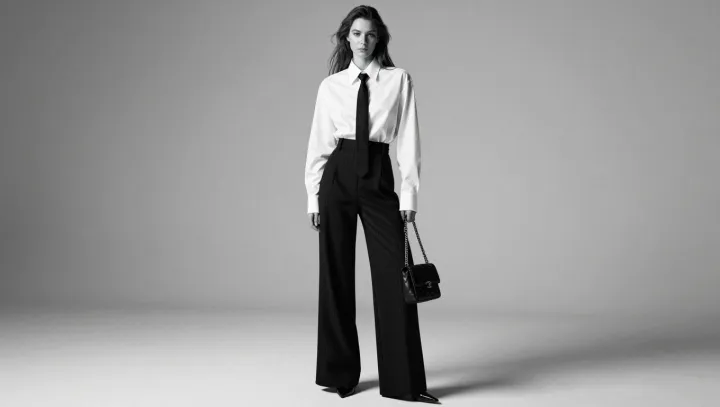
That thrown-on outfit that looks effortless is usually running a tighter algorithm than a showpiece on a catwalk. Everyday dressing has no runway lighting, no soundtrack, no choreography. It must survive bad elevators, office chairs and front-facing phone cameras. To read as coherent in that chaos, it relies on strict rules of proportion, contrast and visual hierarchy that compensate for the missing stagecraft.
Proportion is the first quiet rule. A slouchy sweater lands exactly where a cropped hem ends; wide-leg trousers are anchored by visible ankles or heavy shoes to avoid visual entropy. Contrast is the second: sharp against soft, matte against gloss, tailored against loose. That tension creates a kind of aesthetic homeostasis, keeping the look stable even when the pieces seem random.
Runway looks can outsource meaning to context; an extreme silhouette reads as intentional because the entire set screams theater. Off the runway, clothing competes with traffic lights, office cubicles and grocery aisles. The eye edits faster, like ruthless data compression. Only outfits with clean ratios, clear focal points and a managed color bandwidth survive that compression and still register as relaxed but deliberate.
The paradox is simple: the more effortless something must appear in real life, the more tightly its hidden rules need to be coded.