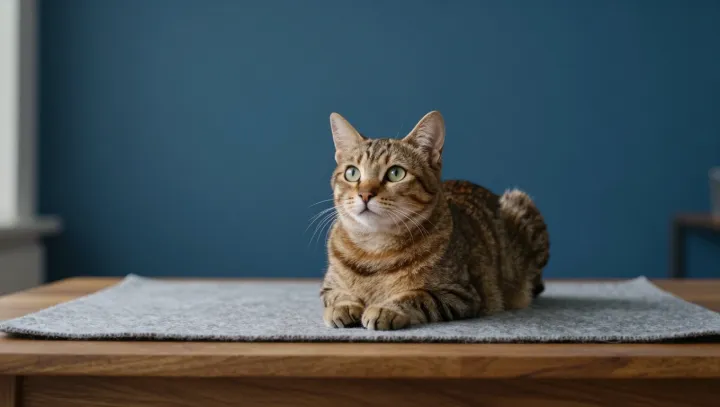
Thick fur, stocky build and a seemingly rugged profile give the Pallas’s cat the look of a survivor, yet in zoos it repeatedly fails that test. This small wild cat, tuned to harsh, high-altitude steppes, records one of the highest mortality rates in captive care, not despite its specialisation but because of it.
Natural selection carved a body with low basal metabolic rate and extreme insulation, optimised to conserve heat where ambient temperatures and pathogen loads stay low. In that setting, immune systems could afford to remain comparatively naive: there was little evolutionary pressure to manage a broad spectrum of viruses, bacteria and parasites. Once the same genome is placed in a controlled indoor enclosure, the equation flips. Mild temperatures that suit most carnivores create chronic thermal stress for a species adapted to cold air and thin oxygen, disrupting thermoregulation and energy balance in subtle but cumulative ways.
At the same time, routine microbial communities of zoos, from respiratory viruses to common enteric pathogens, become a lethal challenge for an immune profile that evolved under pathogen scarcity. Even minor infections can progress rapidly, masked by the cat’s dense coat and secretive behaviour. Attempts to standardise husbandry, using protocols that work for other small felids, ignore these edge-case parameters. The Pallas’s cat illustrates how extreme ecological specialisation, once removed from its original context, can turn from asset to hidden liability.